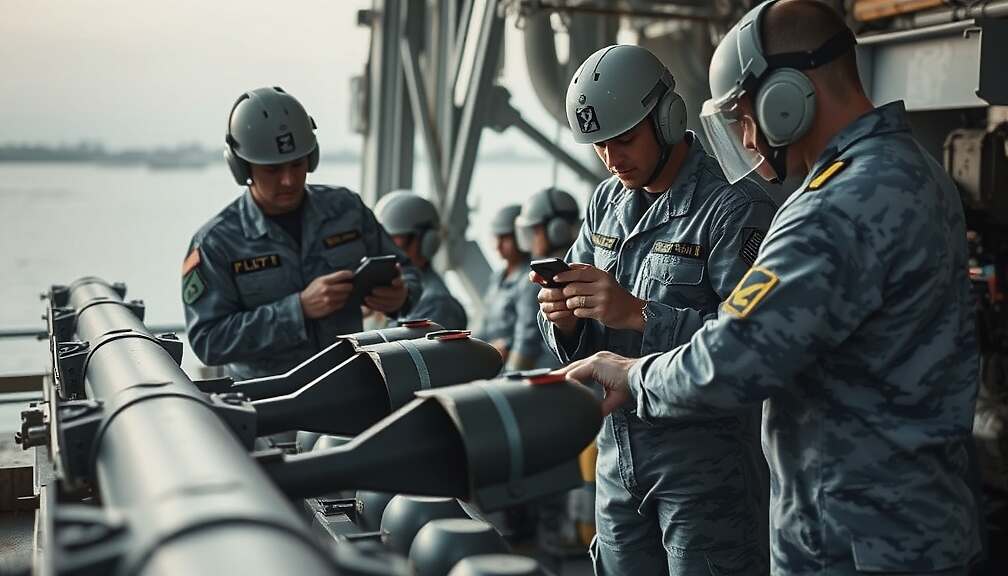
Federal Foreign Minister Johann Wadephul (CDU) stated that the German government continues to advocate for the purchase of Tomahawk cruise missiles in the United States. Wadephul told the newspaper that the current administration is working daily to enhance Germany’s defense capabilities, an issue they are intensely discussing with their allies in the US. Because of this, the German government is also speaking with Washington about the Tomahawks, reinforcing his belief that NATO’s deterrent capabilities remain secure.
He addressed the political hurdles surrounding the system, noting that the plan to station the long-range weapon system-originally promised by Joe Biden and later halted by Donald Trump following criticism from Chancellor Friedrich Merz regarding the Iran War-required effort.
Wadephul emphasized his efforts to clear up any diplomatic friction with the US, asserting that the two countries share many common interests. Regarding Iran, he stated these shared goals are clear: preventing Iran from becoming a nuclear power, curtailing its missile program development, and stopping the destabilizing behavior the country exhibits in the region. He warned that this situation poses a danger not only to Israel but also to Europe and German economic ties, particularly concerning maritime traffic through the Red Sea. He affirmed that the partnership with the United States remains “indispensable” both economically and in terms of security, noting that cooperation with US Foreign Minister Marco Rubio is proceeding in a “constructive and friendly” manner.
Furthermore, Wadephul mentioned the German government’s readiness to send mine-sweeping vessels to the Strait of Hormuz. He confirmed that a mandate would absolutely be secured, either through the United Nations or the European Union. While acknowledging that a UN Security Council mandate would be the ideal path, he pointed to alternatives, such as expanding existing missions like Aspides in the Red Sea or establishing new mandates. He stressed that Europe has profound economic and security interests in maintaining open sea routes. He concluded that any mine-sweeping operation would not be a quick fix, but rather a complex, multi-week process required to guarantee genuine safety within the critical waterway.