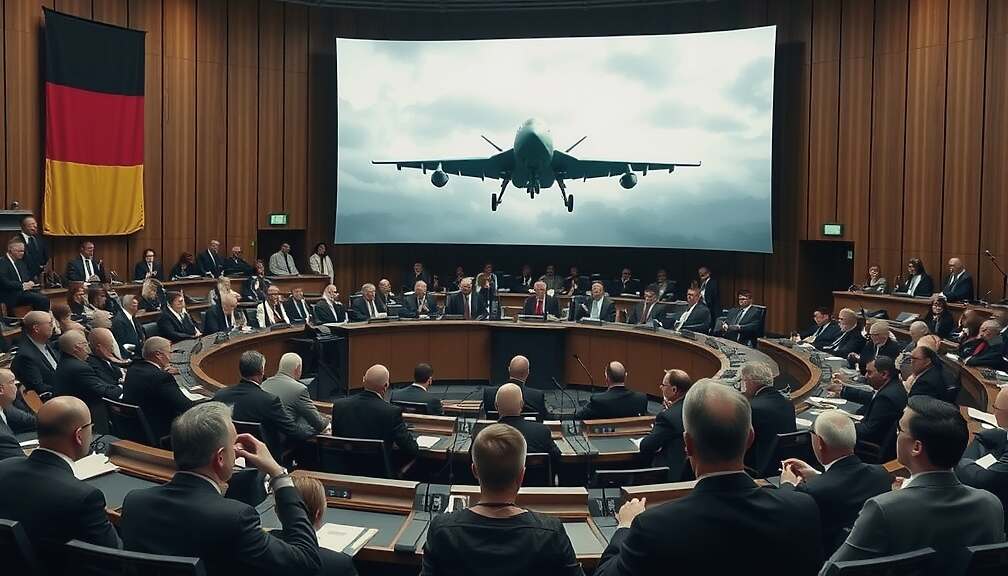
In the German Bundestag a growing opposition has emerged to a planned, multi‑billion‑euro purchase of combat drones. The main source of resistance is the involvement of the controversial U.S. billionaire Peter Thiel, who is listed as an investor in one of the two companies slated to supply the drones, the “Süddeutsche Zeitung” reports. According to several confidential budget submissions from the Finance Ministry, the Bundestag’s Budget Committee is set to approve the procurement on 25 February, with a total value of up to €4.32 billion.
Because Thiel is a shareholder in a Berlin‑based firm, the Green Party is demanding that the deal be cancelled on the grounds of potential risks. Green Bundestag member Sebastian Schäfer told the newspaper, “Our doubts about the forthcoming drone purchase are growing. We need to know who we’re dealing with on such sensitive matters”. The federal government has so far been unable to disclose ownership stakes in the firms.
Green defence policymaker Sara Nanni added that German Chancellor Friedrich Merz (CDU) had said at the Security Conference in Munich that Germany should become less dependent on the United States. “Yet Parliament is set to approve a procurement in which it is at least unclear how much influence the MAGA‑linked investor Peter Thiel has on the German company” she said. Nanni also criticized the extraordinarily high unit prices, arguing that the Parliament should not approve the proposal.
SPD budget and defence expert Andreas Schwarz called for clarification of the deals, noting that “this important procurement project, characterized by large and differing contract sizes with the two suppliers, still raises fiscal questions and needs further clarification”. He said the federal budget must be scrutinised before a decision is made.
The aerial warfare drones are intended for a newly formed German Army brigade of around 5,000 troops stationed in Lithuania on the NATO eastern flank, where they are meant to serve as a deterrent to Russia. In the letters to the Bundestag, it is acknowledged that the quality of the systems cannot yet be fully assessed. The final negotiated contract incorporates a termination clause that allows withdrawal before the final serial production if the qualification process is not satisfactorily completed at the time of signing. Over the seven‑year term of the contract, the contract parties anticipate further technological development of the performance and supplied equipment.