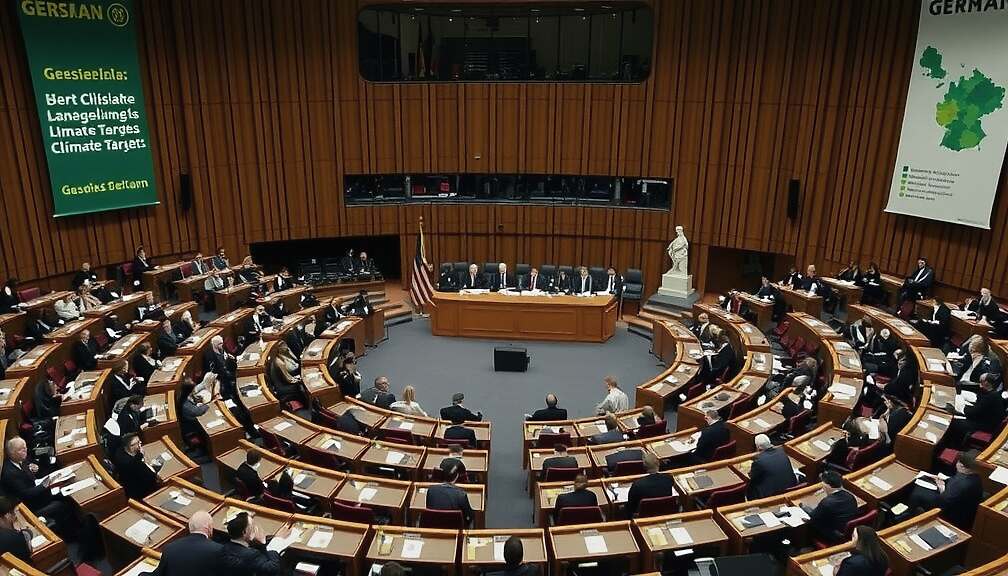
The Green Party in the Bundestag has warned that the planned reform of the heating law will cause Germany to miss its climate targets. Baupolitical spokesman Kassem Taher Saleh told the “Redaktionsnetzwerk Deutschland” (mid‑week edition) that without the 65 percent renewable‑energy rule the country will “significantly miss its climate goals”. He added that the reform will keep Germany dependent on fossil oil and gas, especially from autocratic states.
Saleh criticised the so‑called green‑gas quota as a “technology‑open” but ineffective solution. He argued that green gases will remain scarce and expensive for the foreseeable future, offering no protection for consumers but only a benefit to the gas lobby. The proposed change to the Gebäudeenergiegesetz, according to him, introduces new uncertainty because it weakens climate protection and raises living costs. He accused the Union of fulfilling a “populist campaign promise” while the coalition partner SPD was weakened, claiming that instead of standing up to people like Merz, Spahn and Söder, the Greens are steering society into a new heating‑cost trap.
Barbara Metz, the federal managing director of the German Environmental Aid (DUH), accused the governing coalition of “climate‑policy hypocrisy”. She said that by dropping the 65 percent renewable rule, the government is effectively abandoning climate neutrality in the building sector and encouraging the installation of new gas and oil furnaces. The reform, she warned, is a deliberate step back and a gift to the fossil‑fuel lobby. Metz added that the government is ignoring a clear instruction from the Federal Administrative Court to amend its climate‑protective program, thereby widening the climate gap and creating new investment voids. She described this as a calculated regression, not a mistake.
The social dimension, according to Metz, is particularly cynical. Millions of tenants are tied to an expensive, ageing gas infrastructure, yet have no say regarding their heating. They bear rising gas prices and network fees while politicians cater to populist promises, effectively losing sight of the public’s interests.
Paula Brandmeyer, deputy head of the Energy and Climate Protection department at DUH, sharply criticized the proposed green‑gas quota. She argued that replacing the 65 percent requirement with a compulsory mix of green gas or green oil is political nonsense that cannot be afforded amid a climate crisis. Brandmeyer highlighted that green fuels are scarce and valuable, making large‑scale use in heating impractical. She warned that the costs are substantial, whereas green fuels would be far more efficient in industry or electricity generation. In her view, the coalition and fossil lobby have prevailed on all fronts.
Minister of Economy Katherina Reiche (CDU) defended the new legislation, stating that the Habeck heating law would be abolished. She emphasized that the reform represents a commitment to “reason, freedom and pace” rather than bans, and that it will lift investment bottlenecks and restart building modernisation. Reiche claimed that this will restore confidence and security for German citizens and strengthen the trade of heating professionals.