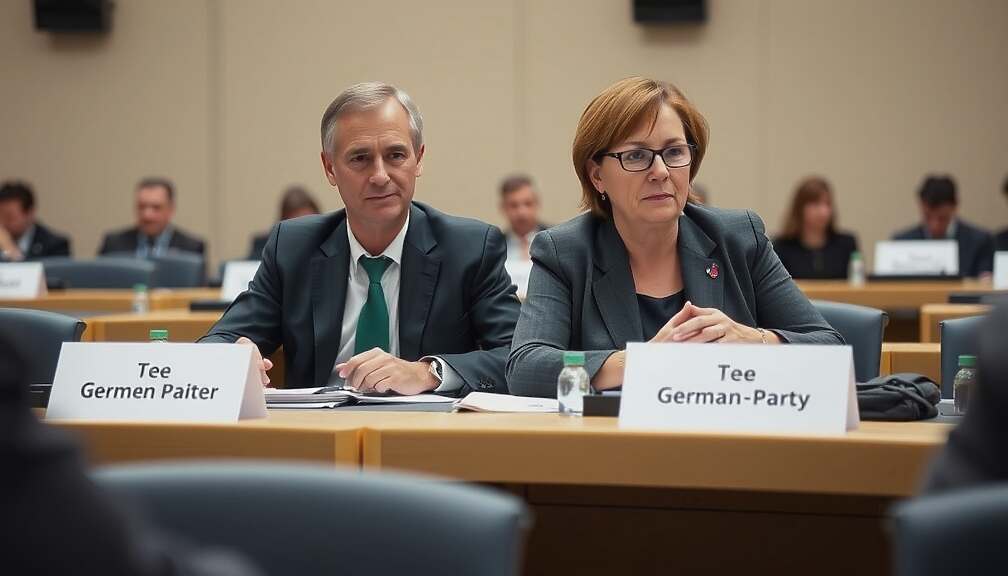
The German Greens have criticized the decision of their party colleagues in the European Parliament to request another review of the Mercosur trade agreement.
Co‑chair of the Greens in the Bundestag, Katharina Dröge, told the “Handelsblatt” (Friday edition) that “in a time like this it is enormously important for the EU to form alliances with other countries that value rules and reliable cooperation”. She argued that cooperation with the Mercosur states is especially relevant and that “geopolitically supporting the agreement is necessary”.
Co‑deputy chair Britta Haßelmann also expressed disappointment. Speaking to the “Süddeutsche Zeitung” (Sunday edition), she said the world has become more uncertain and that “we need solid, rule‑based partners”. She warned that yesterday’s vote sent a poor signal and stressed the urgency of bringing the agreement into provisional application.
Co‑party leader Felix Banaszak was “not happy with the result” he told the “Handelsblatt”. He said the vote did not convey the message of European strength that he had hoped for.
Banaszak viewed the joint majority of Greens and right‑wing populists on the opposition side not as a “firewall” but as an occasion for a discussion on how to confront “right‑wing forces”. He lamented the outcome but noted the different dynamics in the European Parliament and urged all democrats, himself included, to use the event as a chance to examine cooperation and boundaries against right‑wing elements.
When the Greens last year criticized the AfD’s support for a Merz amendment to asylum law, Banaszak said that was a different case. He noted that Merz accepted the AfD’s support for his majority and declared indifference, whereas in the European Parliament many votes are not clear‑cut because factions do not always vote together. He highlighted that European and French conservatives-members of the CDU/CSU faction-also voted in favour, leading to uncertain outcomes.
The European Greens had earlier tried to reach a solution with the European People’s Party (EPP) and its chairman, Manfred Weber. Banaszak said his party had repeatedly offered talks, but Weber allegedly sought majorities with far‑right groups and dismissed negotiations, warning “bite or die”.
Franziska Brantner, co‑chair of the Greens in the European Parliament, called the vote a mistake. She acknowledged that the agreement is not perfect, but praised the strong climate protection elements secured through long negotiations, better than in any other pact. She argued that pursuing multilateral agreements requires accepting compromises.
Baden‑Württemberg’s Minister President Winfried Kretschmann (Greens) also criticized the parliamentary decision. Speaking to the “Frankfurter Allgemeine Sonntagszeitung”, he said he could not understand why the agreement would be delayed at such a critical time, describing the move as a “fatal signal of incapability” especially for concluding other essential trade deals, such as with India.
He emphasized the importance of the Mercosur pact for Baden‑Württemberg, whose economy depends on open markets, reliable partnerships, and a strong Europe. He described the agreement as a useful building block to secure industry, the middle class and many jobs in the state.
Erik Marquardt, chair of Germany’s Green delegation in the EU Parliament, reflected critically on the mid‑week vote. He said it was a “mistake” that the vote achieved such a majority, and that the Conservatives had been seeking majorities with far‑right groups instead of negotiating with the Greens. He insisted the lesson must be learned to prevent a recurrence: “What happened should not have happened”.
Marquardt now advocates for the Mercosur agreement, stating that German Greens will not only support provisional application but also back its ratification by majority.
Out of the twelve German Green Members of the European Parliament, eight voted this Wednesday to have the trade agreement with the South American Mercosur states reviewed again by the European Court of Justice.