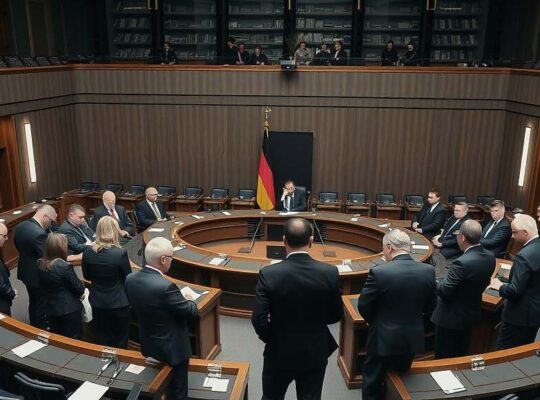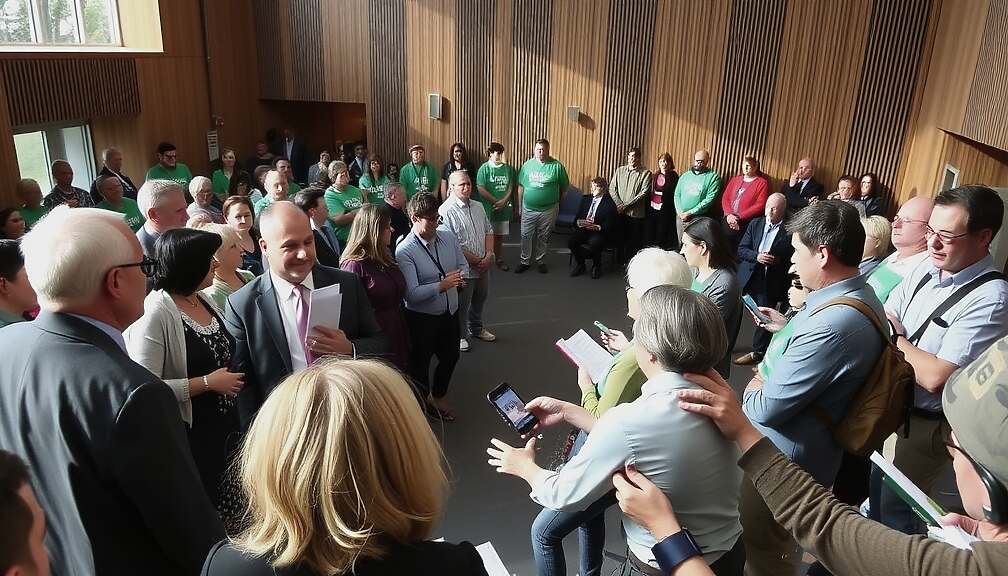
In June the Greens will hold a final vote on a proposed set of statute reforms that the party leadership cleared earlier this week. The federal board and party council approved a draft proposal reported by the “taz”. The draft states that “our task is to further develop our intra‑party democracy” and that the goal is to use democratic principles to “gain new punch in political engagement”. Seventeen individual proposals are set to be voted on separately.
A large portion concerns how the party’s congresses are run. The leadership wants to reduce the number of petitions to make debates and voting clearer, and to raise the threshold for submitting proposals. Simple members can no longer rely on 50 signatures; instead a threshold of 0.05 % of party members will apply, which is about 90 people at present.
To strengthen grassroots participation, the leadership plans to introduce “membership councils”. These would act as a debate space similar to a citizens’ council, with members drawn by lottery to develop recommendations on contentious issues. Up to one council per year could have 30-60 members, and party congresses could vote on their outcomes.
The role of the political secretariat will be renamed “General Secretary”. The separation of office and mandate will be relaxed: three, rather than two, federal board members may simultaneously serve as parliamentarians.
The party council itself will be restructured into a broader board to reflect power positions. The new charter would aim to include about two members from each state government, possibly federal government, the European Parliament, state parliaments, and municipalities. This is a target rather than a fixed requirement.
Pegah Edalatian, the party’s political director, told the “taz” that the leadership is already expected to make strategic decisions and that communication among them should improve. She emphasized that the Greens still want to strengthen party congresses by bringing key debates to the stage and helping delegates understand the issues.
Over the next few months members will discuss the proposals in depth. Voting will begin on June 9, with results expected in July. According to the leadership, a simple majority will suffice to adopt the proposals, and no quorum is required.