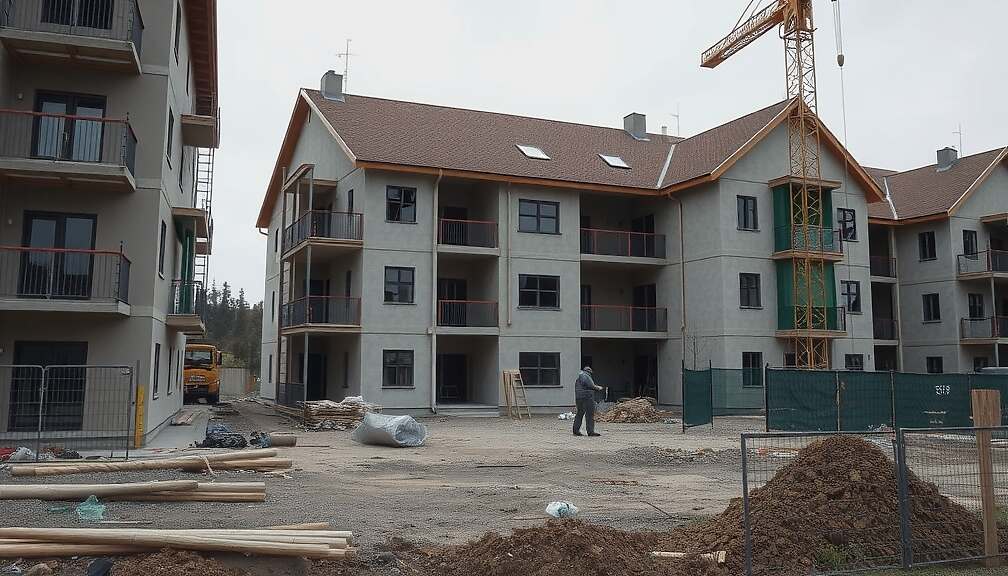
Germany’s construction sector is facing persistent inflationary pressures, with new residential building costs rising steadily, according to the Federal Statistical Office (Destatis). November 2025 saw a 3.2% increase in the price of newly constructed conventional residential buildings compared to the same period in 2024, a slight acceleration from the 3.1% increase recorded in August 2025. Month-on-month, prices climbed 0.5% in November.
The data highlights a complex interplay of factors impacting the German construction landscape, raising concerns about affordability and potential bottlenecks in the housing market. While the rise in overall construction costs might appear moderate, a deeper dive reveals significant sectoral disparities and points to underlying vulnerabilities.
Specifically, the cost of raw construction work for residential buildings jumped 2.5% year-on-year, primarily driven by escalating prices for concrete and brickwork – vital components of the overall index. A 1.5% rise in concrete work and a 1.3% increase in bricklaying are indicative of challenges in securing material supplies and managing logistical complexities, issues which have plagued the industry for some time. Furthermore, roofing work saw a dramatic 4.5% price surge, alongside a 3.1% increase in groundwork and a significant 5.4% rise in timber and carpentry work.
The upward trend is even more pronounced in finishing works, with prices soaring 3.8% compared to November 2024. Crucially, these increases are heavily influenced by the rising cost of environmentally-focused infrastructure. A 4.4% price hike in heating systems and centralized water heaters – including the increasingly popular adoption of heat pumps – suggests that the government’s ambitious climate targets and subsidies are unintentionally contributing to inflation within the construction sector. Similarly, costs for metalwork increased by 2.2%, while electrical, security and information technology installations experienced a substantial 5.4% jump, alongside a 3.5% rise in the price of external thermal insulation composite systems.
Maintenance work on existing residential buildings also saw a considerable increase of 4.1% year-on-year, reflecting broader inflationary pressures impacting household budgets and potentially delaying necessary repairs.
Beyond residential construction, prices for new office buildings and commercial buildings also saw increases – 3.5% and 3.3% respectively – demonstrating the pervasive nature of this price escalation. Road construction costs similarly rose 3.5%.
Analysts are questioning the long-term sustainability of current price levels and the potential impact on government-led construction initiatives aimed at addressing the housing shortage and modernizing infrastructure. The steadily rising costs, particularly those linked to green technologies, may necessitate a reassessment of existing subsidy programs and a deeper examination of supply chain vulnerabilities within the German construction industry to avoid hindering much-needed development. The relatively moderate increases compared to previous peaks offer a brief respite, but the underlying inflationary pressures remain a significant political and economic challenge.