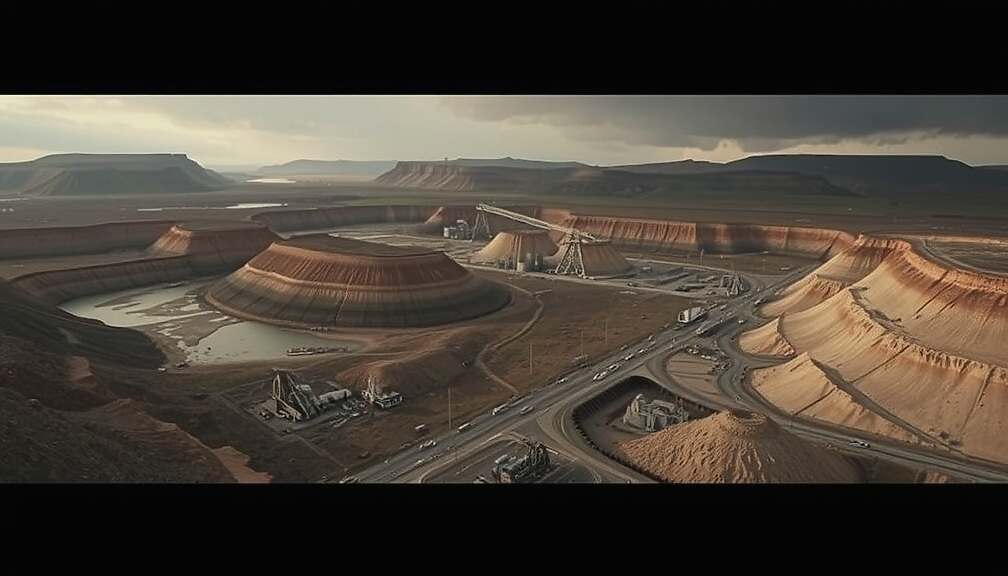
The German Chamber of Industry and Commerce (DIHK) has issued a sharp critique of the federal government’s approach to resource management, advocating for a significant shift towards exploiting domestic mineral reserves. In a recently released policy paper, reported by the “Rheinische Post”, the DIHK argues that Germany’s current dependence on foreign imports represents a paradoxical situation given the nation’s own substantial, yet largely untapped, mineral wealth.
The DIHK’s call for a renewed commitment to domestic mining operations stems from concerns over geopolitical instability and the increasing difficulty in adhering to the government’s own due diligence standards within global supply chains. The paper highlights the burdensome complexities surrounding mineral extraction within Germany, citing lengthy permitting processes, intensifying land-use competition and stringent environmental regulations as primary obstacles.
Beyond domestic extraction, the DIHK’s report questions the efficacy of current import strategies, particularly regarding sourcing from high-risk nations. It suggests a relaxation of strict due diligence mandates in these areas through measures like transitional periods, pilot programs and tiered reporting requirements – a proposal likely to draw scrutiny regarding potential ethical compromises. Further exacerbating the challenges for German industries are export restrictions imposed by various countries, which the DIHK maintains are in violation of World Trade Organization (WTO) regulations. The chamber is urging the federal government and the European Union to actively enforce WTO rules and exert greater pressure on nations flouting international trade agreements.
The DIHK’s recommendations represent a significant divergence from established environmental and social responsibility paradigms, signaling a growing pressure within Germany’s industrial sector to prioritize economic security and competitiveness, even if it means a potential reassessment of existing sustainability commitments. The move will undoubtedly fuel debate about the balance between resource independence, environmental protection and ethical sourcing within Germany’s future economic policy.