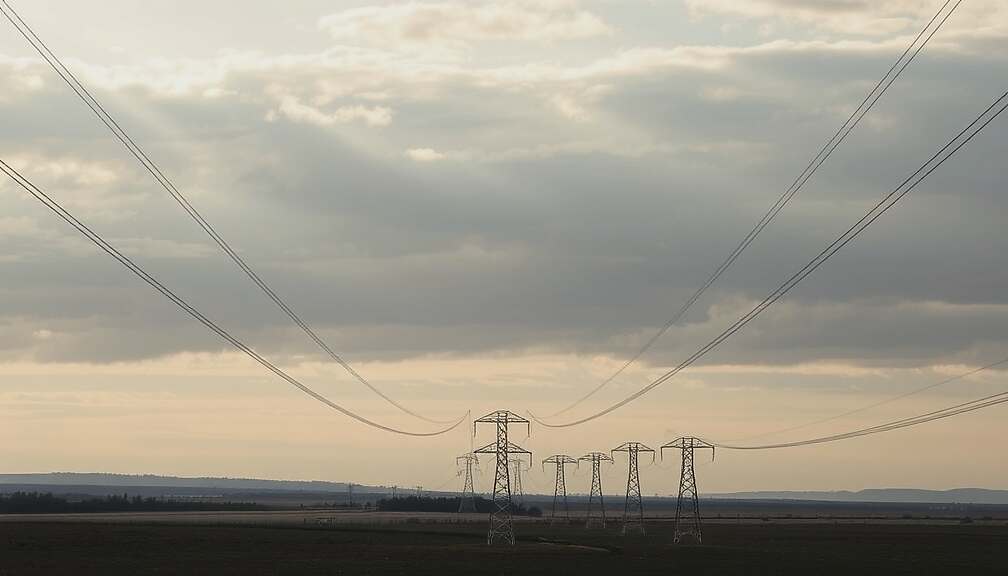
The German government’s ambitious climate targets are facing renewed scrutiny, prompting Environment Minister Carsten Schneider to propose a controversial shift in strategy for expanding the national electricity grid. In an interview with the “Rheinische Post”, Schneider articulated a preference for prioritizing overhead power lines (freileitungen) over underground cables (Erdkabel) for future grid projects, citing escalating costs as a major impediment to the energy transition’s progress.
Schneider’s suggestion represents a significant departure from current infrastructure development trends and has immediately ignited debate within the governing coalition. He argued that the substantial expense associated with burying cables – a process he deemed “laborious” – is disproportionately hindering the speed of renewable energy integration. He proposed limiting underground installations to projects already in the planning and approval stages, while pushing for overhead lines for all subsequent expansions to accelerate deployment and reduce overall costs.
This shift in policy, however, raises concerns about the visual impact and potential social acceptance of overhead power lines, particularly in densely populated areas. Critics suggest that prioritizing speed at the expense of aesthetics and community concerns could undermine broader public support for the energy transition.
Schneider’s comments follow recent reports indicating that Germany’s transport and building sectors are falling behind schedule in achieving their climate goals. He acknowledged this shortfall and announced an imminent unveiling of a new subsidy program designed to encourage wider adoption of electric vehicles, aiming to provide further impetus to the electric mobility sector.
The minister also reiterated the importance of upholding the existing framework of climate protection regulations in the upcoming reform of the Heating Law (Gebäudeenergiegesetz). The current legislation, he emphasized, is a crucial factor in reducing CO2 emissions and securing the success of Germany’s climate strategy. Heated internal discussions are expected regarding how to ensure the law’s effectiveness amidst pressures for adjustments.
While acknowledging the long-term economic benefits of heat pumps for many households, Schneider highlighted the need for continued financial support, particularly for lower and middle-income families. He suggested that those with higher incomes should be able to shoulder the costs of such transitions without state assistance, positioning the subsidies as vital for ensuring equitable access to climate-friendly technologies. The proposal underscores the increasingly complex political calculus surrounding Germany’s energy transition, balancing environmental ambitions with economic realities and social equity concerns.