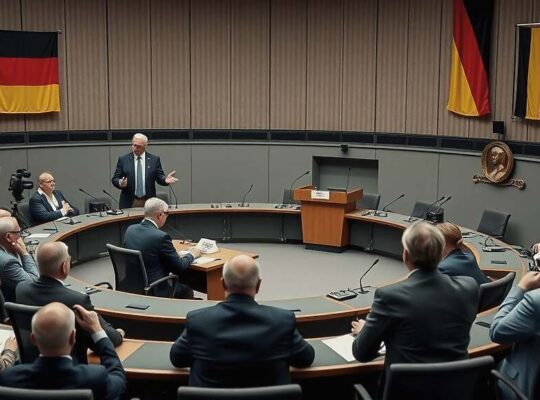
The opposition CDU is escalating the political battle surrounding Germany’s planned overhaul of heating regulations, advocating for a complete rollback of climate protection mandates for new heating systems in existing buildings. CDU parliamentary group leader Jens Spahn has publicly demanded the abolishment of all current and proposed climate targets related to heating installations in older properties, a move that sharply contrasts with the stance of the governing SPD.
Spahn’s proposal, voiced through the Redaktionsnetzwerk Deutschland, targets the contentious 65% renewable energy requirement currently stipulated for new heating systems in buildings beyond new constructions. He insisted that this requirement “must go” signaling a significant shift away from the previous government’s strategy to accelerate the transition to renewable heating sources. While remaining deliberately vague about whether he favors a complete elimination or a reduced renewable energy threshold, Spahn emphasized that negotiations will occur within the coalition, not through public announcements.
The contentious debate arises from the postponement of revisions to the “Building Energy Act” (GEG), initially intended to mandate a gradual replacement of oil and gas heating systems with more climate-friendly alternatives and spur the adoption of heat pumps. Differences between the CDU and SPD led to the rescheduling of the overhaul, now rebranded as the “Building Modernization Act” under the leadership of CDU leader Friedrich Merz. The SPD remains firmly committed to upholding the 65% requirement, viewing it as crucial for achieving Germany’s climate goals.
Critically, the CDU’s move throws into question the feasibility of achieving Germany’s climate targets, especially when considering the significant emissions stemming from the building sector. The Advisory Council on Climate Questions, responsible for monitoring the implementation of the federal climate protection law, has repeatedly stressed the urgent need for action in buildings to avert escalating costs for energy consumers and broader social costs across Germany and the EU. The CDU’s push towards ‘technology openness’ without clear timelines or concrete alternatives raises concerns regarding the overall effectiveness and social equity of any revised legislation. The forthcoming presentation of guiding principles early next year will be a key indicator of how the coalition intends to balance climate ambition with political expediency.