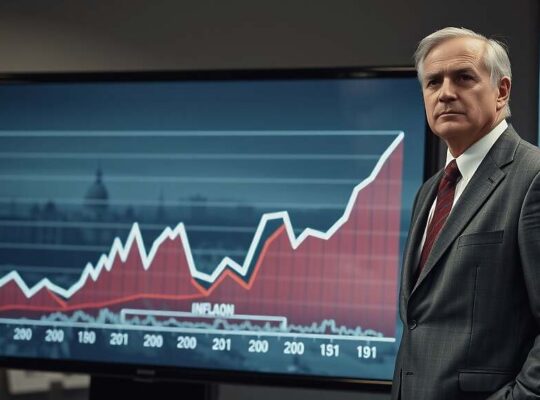
Preliminary data released by the Federal Statistical Office (Destatis) on Monday reveals a complex industrial performance picture for Germany in October 2025. While seasonally and calendar-adjusted industrial production increased by 1.8 percent compared to September, a closer examination of the underlying trends raises concerns about the sustainability of this growth, particularly when viewed against a broader economic context.
The upward surge in October was considerably moderated by a decline of 1.5 percent when considering the three-month average from August to October, signifying a potential stall in momentum. The initially reported 1.3 percent increase in September over August was also revised downwards to a more modest 1.1 percent, highlighting the preliminary nature of these figures and hinting at potential inaccuracies in earlier assessments. Year-on-year, production registered a marginal increase of 0.8 percent, failing to inspire significant confidence in long-term recovery.
The construction sector emerged as a significant contributor to October’s gains, with production rising by a robust 3.3 percent. Gains were also seen in the machinery (+2.8 percent) and data processing equipment (+3.9 percent) sectors. However, offsetting these positives was a noticeable dip in automotive production (-1.3 percent). This downturn within the automotive industry, a critical pillar of the German economy, is particularly worrying, given ongoing challenges related to supply chain disruptions, the transition to electric vehicle production and shifting consumer demands. Critics argue that continued reliance on traditional automotive exports poses a vulnerability in Germany’s industrial landscape.
Analyzing the “producing industry” – excluding energy and construction – shows a 1.5 percent increase compared to September. Across all main industrial groups, production experienced growth; investment and consumer goods each rising by 2.1 percent, while intermediate goods increased by 0.6 percent. However, when compared to October 2024, the industrial sector experienced a slight decline of 0.1 percent, underlining persistent headwinds.
The performance of energy-intensive industries presents a mixed bag. Production in this crucial segment grew by 0.6 percent both month-on-month and over the three-month period. Yet, year-on-year, energy-intensive production remains marginally lower (0.1 percent), echoing broader concerns about Germany’s competitive position and energy security in a rapidly evolving global environment. Some economists are questioning whether current government policies adequately address the challenges faced by these industries, particularly in regard to energy costs and regulatory burdens.