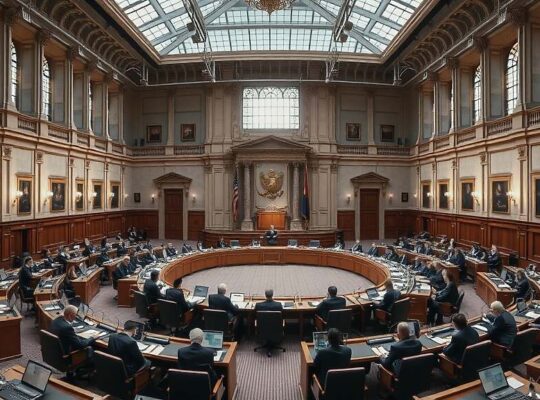
The German Bundestag is facing mounting criticism over a substantial increase in parliamentary funding despite a reduced number of representatives and the dissolution of several political factions. According to a report in “Der Spiegel”, the Bundestag’s budget committee unanimously approved a rise in financial support for the remaining five parliamentary groups to €141.6 million for 2026. This represents an increase from the €137.8 million allocated for 2025, itself an upward revision from prior years.
Prior to the FDP’s departure and the BSW group’s dissolution, the Bundestag administration initially attempted to significantly reduce funding by excluding the FDP’s allocation – a group that received approximately €18.44 million in 2024, with an additional €4.57 million slated before their exit. This maneuver aimed to reflect the shrinking size of the legislative body, which has been reduced from 733 to 630 seats following a recent electoral law reform.
The decision to disregard this initial cost-cutting proposal and instead approve further increases has drawn sharp rebuke from taxpayer advocacy groups. Reiner Holznagel, President of the German Taxpayer Association, condemned the move as a “secret increase” that contradicts the anticipated savings resulting from fewer parliamentarians. Holznagel argued that the funding should have demonstrably decreased considering the reduced parliamentary representation, accusing the lawmakers of disregarding the principle of fiscal responsibility.
The Bundestag has attempted to justify the escalating costs, citing increased personnel expenses for parliamentary staff. However, critics argue that this explanation fails to address the fundamental issue of escalating parliamentary expenditures at a time when taxpayers are facing rising cost-of-living pressures and demanding greater accountability from their representatives. The controversy raises broader questions about the transparency and proportionality of parliamentary funding in Germany and the extent to which lawmakers are prioritizing efficiency and fiscal prudence.