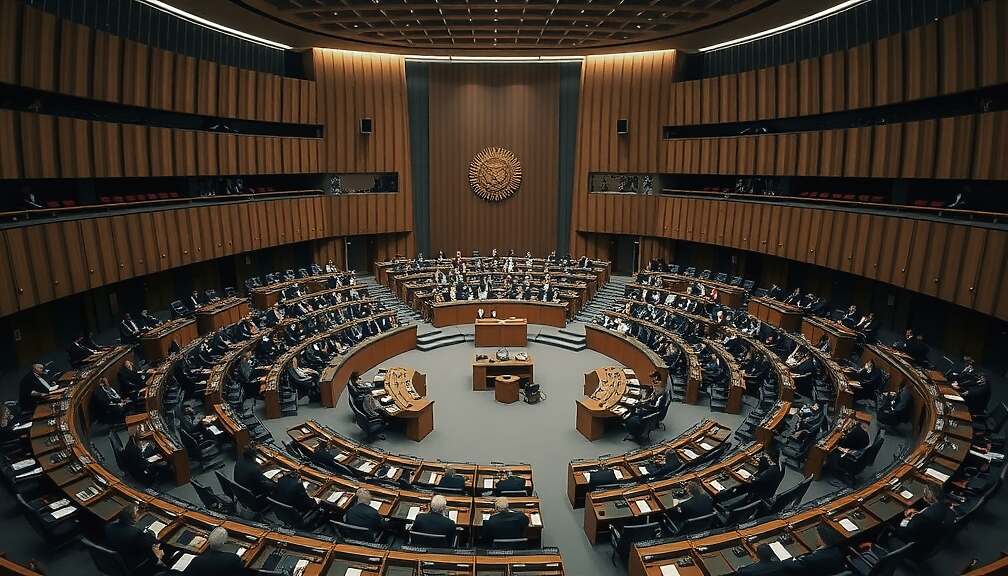
The Bundestag has approved the federal government’s pharmacy reform. The corresponding Law on the Development of Pharmacy Supply achieved the necessary majority in parliament on Friday.
The core objective of the legislation is to economically strengthen pharmacies and grant them more authority to expand the range of services available to the public. The government draft highlighted that smaller and rural pharmacies specifically face challenges related to staff shortages, structural changes, and declining profitability. The aim is to create improved economic conditions for owner-operated pharmacies, while also ensuring that local pharmaceutical expertise is utilized better for public health and prevention services. Furthermore, the reform seeks to reduce bureaucracy and reinforce the responsibility of pharmacists.
The draft includes various detailed regulations. For instance, the requirements for establishing a branch pharmacy (Zweigapotheke) are being lowered. In the future, branch pharmacies can be opened in areas where the supply of medicines is significantly restricted. To enable more flexible working models, the management of branch or satellite pharmacies can also be handled by two people, allowing for a clear temporal or organizational division of responsibilities.
Under official approval, experienced Pharmaceutical Technical Assistants (PTA) will be able to temporarily cover pharmacy operations in rural regions for a maximum of 20 days, with no more than 10 consecutive days. In addition to full overnight shifts, partial evening shifts will now be subsidized through the night and emergency duty fund.
Pharmacies will also be permitted to administer vaccinations for all non-live vaccines. This expansion involves not only broadening medical training but also extending remuneration negotiations. Finally, the reform will allow quick tests for certain common pathogens in pharmacies and licensed care facilities, necessitating a partial lifting of the requirement for a doctor’s prescription.