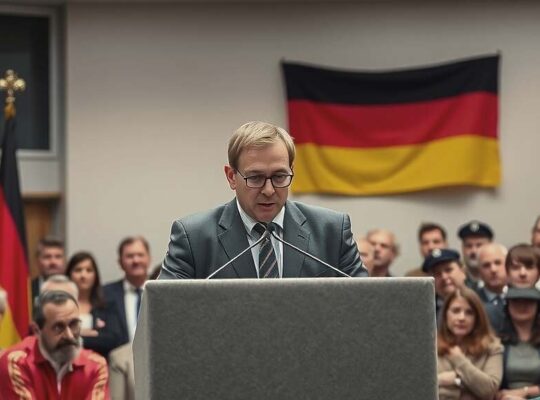
The German Bundestag decisively rejected a recount of the recent federal election on Thursday, effectively ending a challenge brought by the upstart “Bündnis Sahra Wagenknecht” (BSW) party. A motion recommending against a recount, proposed by the electoral oversight committee, passed with a significant majority of 427 votes in favor and just 129 against, with one abstention. The vote underscored the deep partisan divisions surrounding the election result and raised questions about the scrutiny afforded to emerging political forces.
BSW, a left-wing populist party led by Sahra Wagenknecht, narrowly missed entering the Bundestag, falling just 9,529 votes short of the five percent threshold required for parliamentary representation. The party lodged approximately 20 substantive objections to the election results, encompassing nearly 95,000 polling stations.
Carsten Müller of the conservative CDU (Christian Democratic Union) argued forcefully against the recount, stating that exhaustive reviews of the party’s objections had found no evidence of systemic irregularities. “Not a single one of these approximately 20 individual arguments has been proven correct upon examination. In most cases, the opposite has emerged” he stated during the Bundestag debate.
Fabian Jacobi, representing the far-right Alternative for Germany (AfD), presented the BSW’s arguments, alleging instances where votes intended for BSW were mistakenly attributed to the obscure “Bündnis Deutschland” party. While acknowledging the uncertainty surrounding these claims, Jacobi maintained that a recount was necessary to definitively resolve the matter. “The circumstances raised suggest this may have occurred. Currently, we don’s know conclusively. Only a recount can remove this uncertainty.
The SPD’s (Social Democratic Party) Johannes Fechner defended the integrity of the election process, praising the efforts of election officials and highlighting findings from post-election reviews. He attributed increased vote totals for BSW following the initial release of results to factors unrelated to genuine vote miscounts, such as the discovery of mail-in ballots with votes for multiple parties and inadvertent transmission errors. Fechner also pointed to an instance where a technical malfunction prevented data capture at one polling station, leading to a temporary increase in vote totals for all parties.
“The critical point is that we cannot arbitrarily undertake a recount based on speculation or mere possibilities” Fechner emphasized, referencing a ruling by the Federal Constitutional Court concerning the Berlin election. This legal precedent, he asserted, prevents recounts based on unsubstantiated claims.
The rejection of BSW’s request raises concerns about the fairness of electoral processes and the potential for silencing emerging political voices, particularly those challenging the established order. While proponents argue the decision protects the integrity of the electoral system and avoids reopening old wounds, critics accuse the ruling coalition of dismissing legitimate concerns and limiting democratic accountability. The outcome is likely to fuel further debate regarding the parameters of electoral challenges and the level of scrutiny afforded to parties attempting to disrupt the German political landscape.