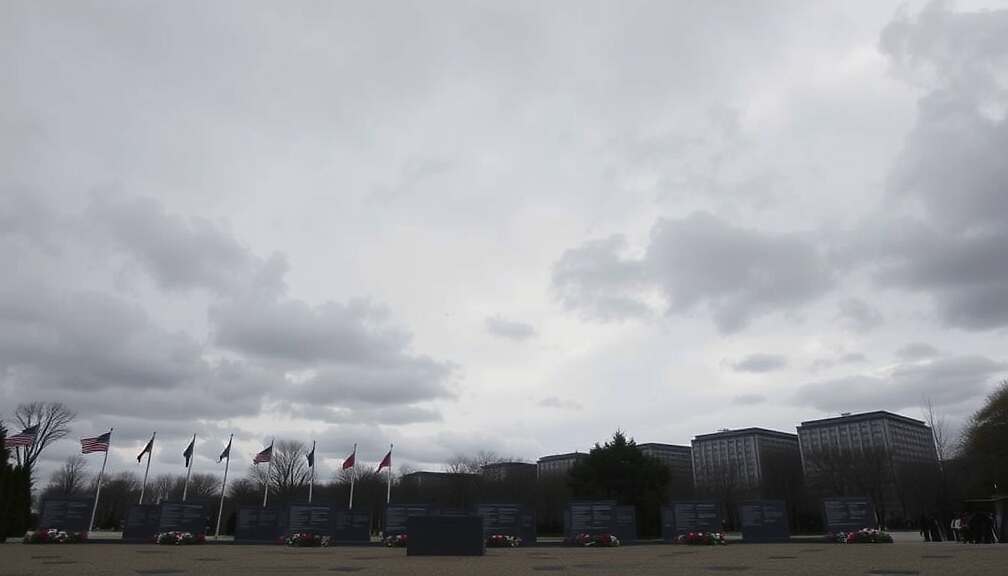
The German Bundestag has formally endorsed the establishment of a memorial site dedicated to the Polish victims of World War II and the suffering endured under German occupation. The resolution, passed on Wednesday, garnered support from the governing coalition partners, the Christian Democratic Union (CDU) and Social Democrats (SPD), alongside the Green Party and the left-wing opposition. While the Alternative for Germany (AfD) largely abstained, with some individual members registering dissenting votes, the move signals a renewed commitment to confronting Germany’s historical responsibility.
Discussions are underway with the state of Berlin to initiate the process of creating the memorial, with the former Kroll Opera house – the very location from which Adolf Hitler announced the invasion of Poland on September 1st, 1939 – being considered as a potential site. A competition, involving artistic and architectural proposals, will be launched, crucially ensuring the inclusion of Polish experts in the selection process. A temporary memorial stone currently marks the site.
During the parliamentary debate, CDU cultural policy spokesperson Ottilie Klein underscored the scale of the devastation, highlighting that over five million Polish citizens perished – representing roughly one-fifth of the country’s population. Cities and villages were systematically razed and virtually every family experienced profound loss. She further emphasized the chilling fact that approximately half of the victims of the Holocaust were Polish citizens.
Beyond the staggering loss of life, Klein’s remarks also shed light on the Nazi regime’s broader agenda: the deliberate attempt to dismantle Polish culture. She detailed the targeted elimination of the Polish intellectual elite, the theft and destruction of cultural heritage and the systematic abduction of thousands of Polish children who were raised in Nazi-aligned institutions, intended to indoctrinate them with the regime’s ideology.
The creation of a permanent memorial in the heart of Berlin is intended as a powerful and concrete expression of remembrance, a symbolic acknowledgement of the enduring damage inflicted upon Poland and a crucial step towards fostering reconciliation. However, the AfD’s ambivalent stance raises questions about the level of commitment within German political discourse towards fully reckoning with this complex and painful chapter of history. The inclusion of Polish voices and expertise in the memorial’s design and development will be vital not just for historical accuracy, but also to ensure the space serves as a genuine embodiment of shared responsibility and lasting respect.