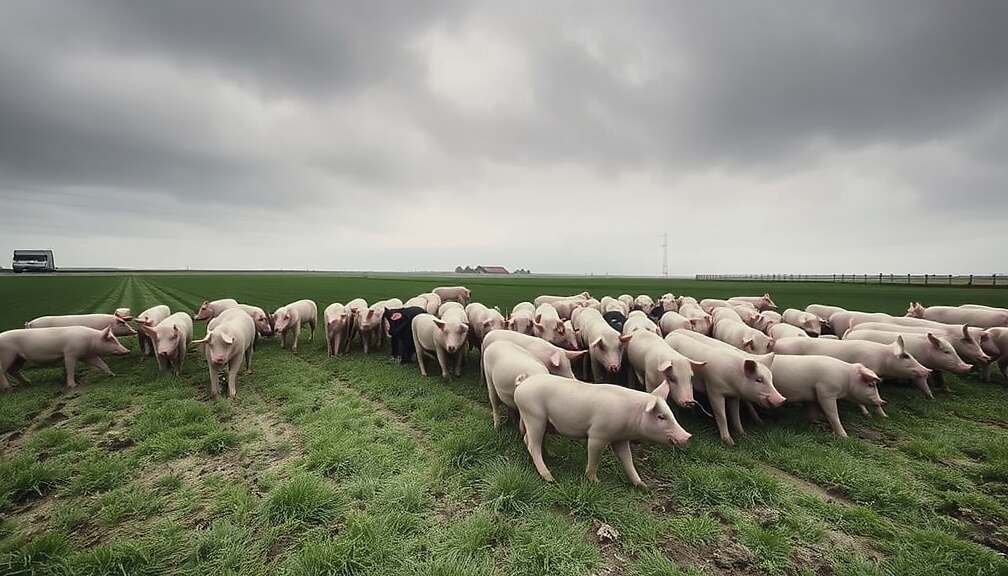
Preliminary figures released by the German Federal Statistical Office (Destatis) reveal a complex and potentially concerning trend within the nation’s agricultural sector, particularly regarding its livestock population. As of November 3, 2025, Germany held 21.5 million pigs across 15,220 farms, marking an increase of 2.8% compared to the May 2025 survey and 0.9% year-on-year. While the total pig population has seen a slight rebound, critical analysis suggests this growth is occurring within a landscape of deepening structural shifts and long-term decline.
The number of farms, however, paints a less optimistic picture. While marginally stable compared to May 2025, the number of pig farms has shrunk significantly over time: a decrease of 2.7% compared to November 2024 and a staggering 40.8% since 2015, representing a loss of over 10,500 farms. This substantial contraction underscores a consolidation within the industry, with the average farm size expanding dramatically. In 2015, farms held approximately 1,100 pigs on average; that figure had risen to over 1,400 by 2025, a trend that exacerbates concerns surrounding market power and the viability of smaller, independent farms.
The data also highlights discrepancies within the pig sector itself. While the number of breeding sows increased modestly, the number of market-ready pigs (mastswine) actually declined by 6.4% (626,200 animals) compared to the previous year. In contrast, the population of piglets and young pigs saw a significant 8.1% rise, suggesting a potential over-reliance on increasing production at an earlier stage rather than sustained market demand.
Beyond pigs, the livestock landscape reveals continued challenges. The cattle and dairy cow population remained relatively stable, albeit with a slight decrease in overall cattle numbers and a precarious increase in dairy cows. The long-term trend, however, shows a concerning 16% reduction in cattle and a 10.9% decrease in dairy farms since 2015. These figures raise questions about the long-term sustainability of German dairy farming and the impact on rural economies.
The sheep population experienced a modest increase, although still below levels seen a decade ago, reflecting a wider pattern of fluctuating livestock numbers. The ongoing decline in the number of sheep farms, mirroring the pig sector’s consolidation, further points to the broader structural vulnerabilities facing smaller agricultural enterprises across Germany.
These statistical trends demand close scrutiny. While the slight uptick in the pig population might appear positive on the surface, the continued decline in the number of farms, coupled with the increasing average farm size, signals a growing concentration of power within the agricultural sector. This consolidation risks diminishing competition, potentially squeezing smaller producers and reducing consumer choice, while also raising concerns about animal welfare and the resilience of the rural economy. Political interventions, including support for smaller farms and measures to promote market diversity, may be needed to mitigate these long-term effects and safeguard the future of German agriculture.