The Police Federation of North Rhine‑Westphalia (GdP NRW) points out that the Castor shipments from Jülich to Ahaus are due to take place very soon. State chairman Patrick Schlüter said in the Thursday edition of the “Rheinische Post” that the first transport’s start date is no longer weeks away – a fact all parties understand.
A radiation‑protection and workplace‑safety concept, jointly agreed upon, has been implemented at the Münster Police Headquarters, and its requirements go well beyond legal minimums. “That’s why we at GdP NRW are satisfied with it – even though we still consider the operation unnecessary” Schlüter added.
North Rhine‑Westphalia’s interior minister, Herbert Reul of the CDU, shares a similar view. He told the same newspaper that, if it were up to him, he would do without the upcoming Castor transports, but police work cannot be chosen on a wish‑list basis. “We can’t pick and choose operations” he said.
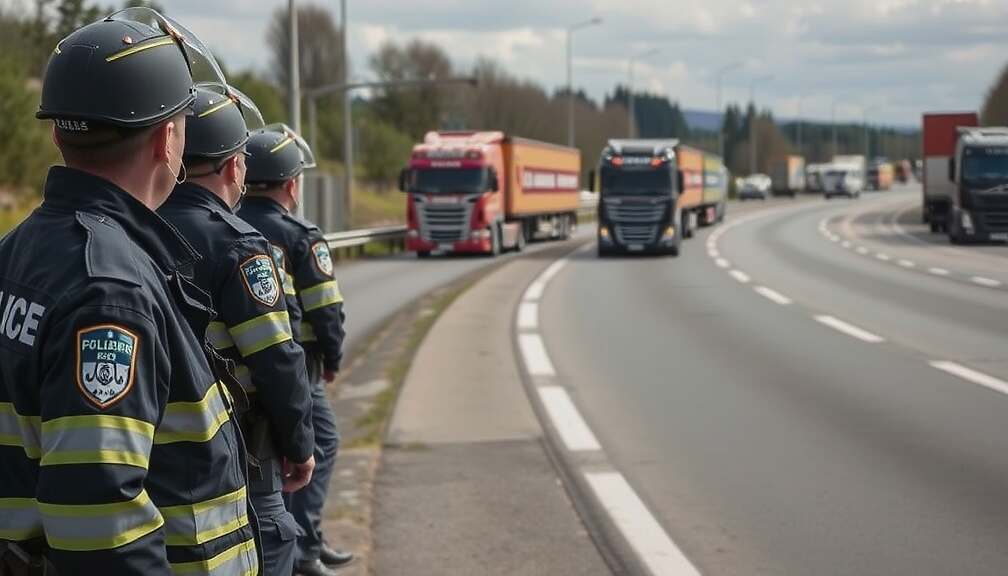
Reul emphasized that safeguarding the Castor shipments is a major challenge, yet the police have the experience and capacity to carry out the operation efficiently and safely-even in the presence of demonstrations that also need protection. “The police will carry out their job and execute this mission professionally. Their role is to ensure that the transport proceeds safely-nothing more, nothing less” he said.
Schlüter described the level of potential opposition as a “black box”. He told the “Rheinische Post” that it would be a huge problem if Castor opponents managed to stop the transport en‑route. He noted the radicalism of those active in Lützerath and added that the scene can mobilise very quickly. “The police are watching closely and observing very carefully” he said.
He considers it right to start with “great force”. Schlüter estimates that GdP will need between 3,500 and 4,500 officers. By comparison, at a derby between Dortmund and Schalke or between Mönchengladbach and Cologne, typically 2,500 to 3,000 officers are deployed.