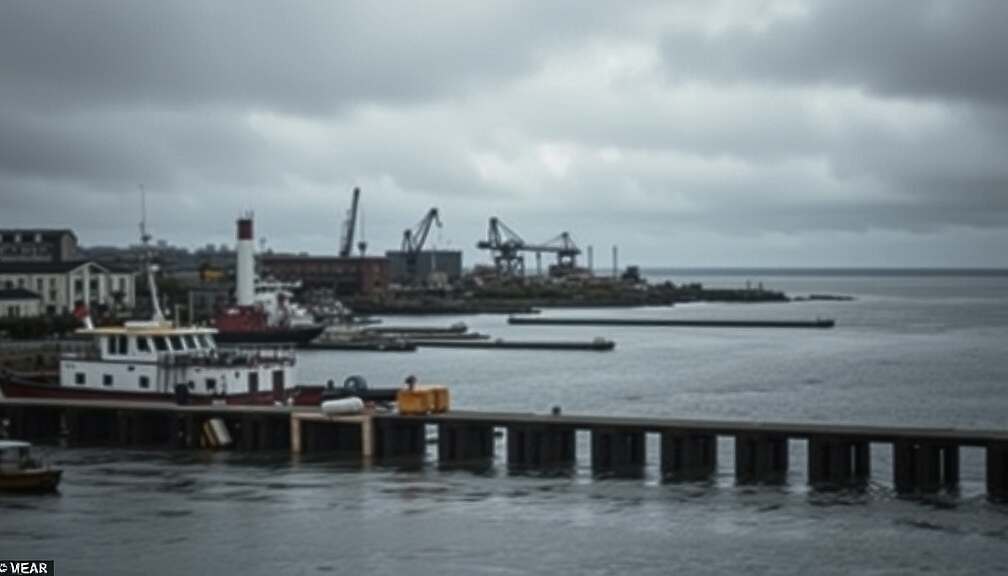
The recent decision by the Federal Finance Court regarding the Russian shadow fleet oil tanker “Eventin” seized near Rügen, has drawn sharp criticism from within the Christian Democratic Union (CDU), raising concerns about Germany’s commitment to curbing Russian war financing and enforcing sanctions. CDU foreign policy expert Roderich Kiesewetter voiced his disappointment, emphasizing a perceived necessity for German courts to embrace a ” Zeitenwende” – a fundamental shift in perspective – regarding the enforcement of sanctions and the broader geopolitical context.
Kiesewetter’s remarks underscore growing frustration within the CDU over what is perceived as a lenient approach to enforcing EU sanctions against the burgeoning shadow fleet, vessels used to circumvent restrictions on Russian oil exports. He explicitly hopes for a legal framework that facilitates the inspection and control of similar ships, arguing that the European Union’s extensive sanction list – encompassing over 1,000 vessels – demands rigorous oversight.
The court’s decision to block the confiscation of the “Eventin” highlights a significant legal hurdle in attempting to disrupt these alternative shipping routes. Kiesewetter’s concerns extend beyond the immediate case, focusing on the potential environmental risks posed by these vessels, which often lack insurance and operate outside established safety standards. The economist and politician argues that allowing them to freely navigate European waters presents a serious hazard.
While acknowledging the need for robust legal justifications for any seizure or search, Kiesewetter insists that courts must fully appreciate the strategic implications. He frames the issue as a critical element in limiting Russia’s financial resources and sustaining the ongoing effort to isolate Moscow economically. The incident has reignited a debate within Germany concerning the balance between upholding legal due process and safeguarding strategic national and European interests in the face of Russia’s aggression.