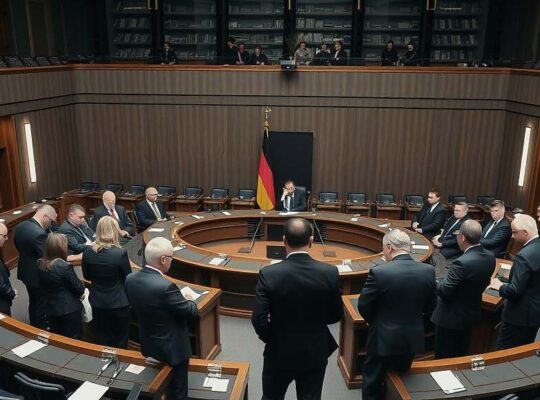
Calls for increased alcohol taxation and a ban on supervised drinking are gaining traction in Germany, spearheaded by politicians from both the governing coalition and the opposition. The proposals reflect a growing concern over public health and the inadequacy of current preventative measures.
Christos Pantazis, the SPD’s health policy spokesperson in the Bundestag, argues that a moderate increase in alcohol prices, drawing on international experience, could significantly reduce risky consumption, particularly amongst young people and heavy drinkers. He deems Germany’s current alcohol taxation “outdated” from a health economics perspective, pointing out that stagnant tax rates – when adjusted for inflation – have diminished their effectiveness in influencing consumer behavior. Statistics released this week confirm that retail prices for alcoholic beverages in Germany are notably below the EU average, further bolstering the argument for adjustment.
Simone Borchardt, the CDU/CSU parliamentary group’s health policy spokesperson, supports the introduction of a dedicated levy earmarked specifically for health-related purposes. Critically, she emphasizes that this should not be used for general budgetary relief, but rather as a targeted tool for improving public health. Borchardt underlines the need for a focus on stronger alcoholic beverages, highlighting the disproportionately high risks associated with addiction, severe illness and the long-term burden on the healthcare system. Collected revenue should be strategically invested in preventative programs, addiction counseling, therapeutic services and treatment for alcohol-related diseases.
Adding to the legislative push, the Federal Ministry for Families is preparing to abolish the controversial practice of “supervised drinking” which currently permits 14-year-olds to legally consume beer, wine and sparkling wine under parental supervision. A legislative draft to eliminate this provision is expected to be launched early in 2026. This move is anticipated to face scrutiny, with critics arguing it may simply drive consumption underground rather than discourage it.
The dual proposals-increased taxation and the ban on supervised drinking-represent a potentially significant shift in Germany’s approach to alcohol policy, though their implementation and long-term effects remain to be seen. The debate is indicative of a broader reckoning within the political landscape concerning the effectiveness of current strategies for safeguarding public health and mitigating the social costs of alcohol consumption.