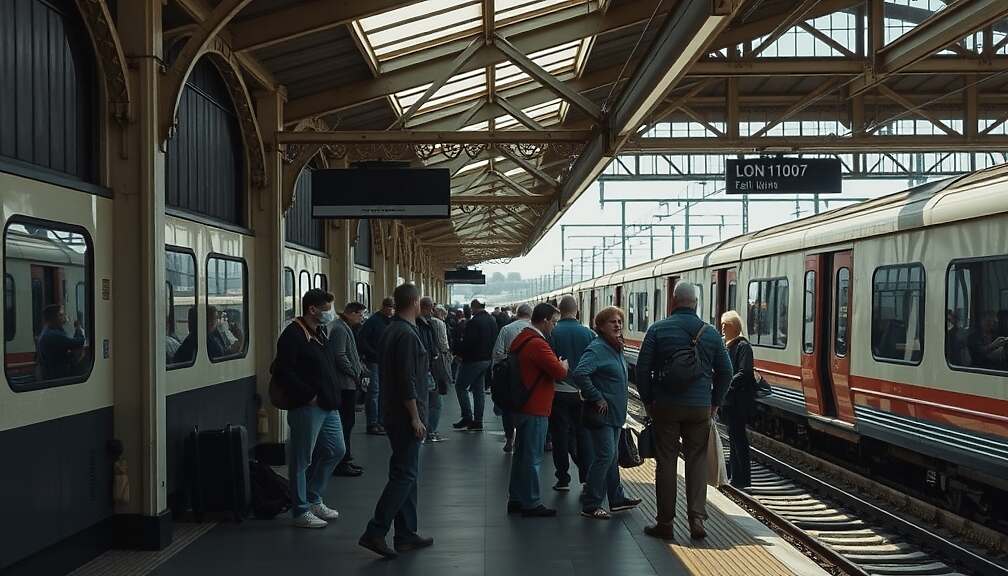
The German government’s stance on railway station toilet accessibility is drawing criticism and sparking debate over the role of public utilities and fundamental rights. In a recent response to a parliamentary inquiry from the Left Party, the Federal Ministry of Transport confirmed that Deutsche Bahn (DB) currently sees no viable path towards providing free access to station restrooms.
The Ministry’s explanation, reported by the Redaktionsnetzwerk Deutschland, cites the necessity of “high standards” regarding cleanliness, hygiene and facilities as requiring “considerable investments”. Across 327 stations, public toilets are operated, with DB’s infrastructure subsidiary, Infrago, responsible for 174 of these. Users are currently charged between €1.00 and €1.50 per visit.
According to the Ministry, cost-effective operation is unsustainable on smaller, less frequented stations and even on busier hubs, the existing user fees are deemed essential to achieving financial viability. This justification has provoked a sharp rebuke from the Left Party, who argue for free and accessible toilet facilities as a cornerstone of democratic participation.
Katalin Gennburg, the Left Party’s expert on tourism and construction within the Bundestag, condemned the government’s position as “alarming” asserting that access to adequate sanitation constitutes a fundamental right. She questioned the responsibility of public enterprises like Deutsche Bahn, emphasizing that sufficient toilet provision isn’t simply a convenience, but a component of passenger safety and a vital aspect of ensuring equitable access to transportation infrastructure. The debate highlights a growing tension between cost-cutting measures and the provision of essential public services, raising questions about the prioritization of profit versus the rights of citizens reliant on Germany’s extensive rail network. Critics argue that placing a financial barrier to basic sanitation actively undermines inclusivity and disproportionately affects vulnerable populations.