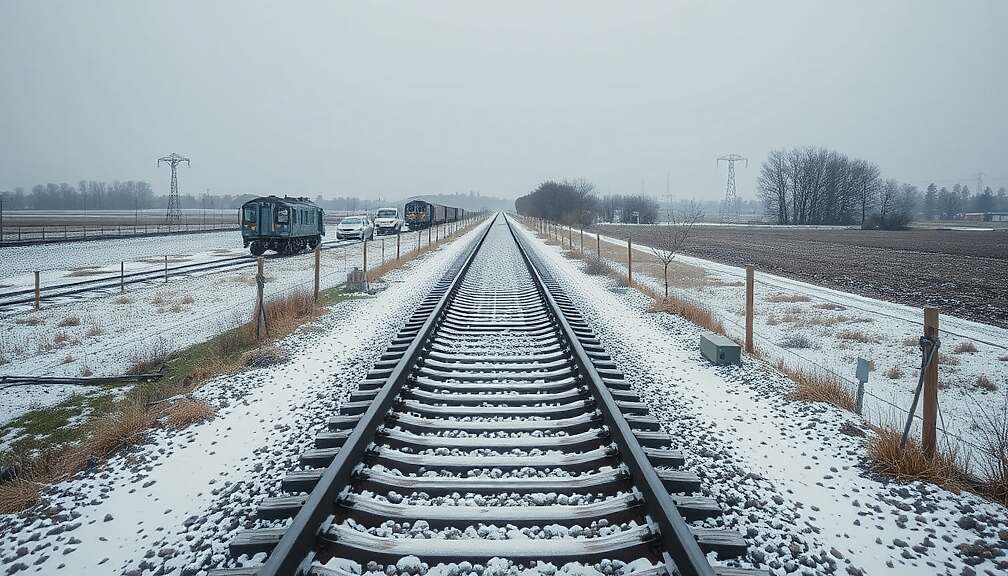
The German national rail operator, Deutsche Bahn (DB), is facing renewed scrutiny over its crisis response following a severe winter storm that crippled rail services across the country. Federal Transport Minister Patrick Schnieder (CDU) announced that DB will be conducting a thorough review of its procedures for handling extreme weather events, acknowledging that significant disruptions left many passengers stranded and facing lengthy delays.
Schnieder, in remarks to the “Rheinische Post” emphasized the frustration of travelers unable to cancel or reschedule their journeys, highlighting the widespread train cancellations and delays triggered by the intense snowfall. While praising the efforts of DB staff, he stated that an analysis will be undertaken to identify both areas of effective coordination and those requiring improvement. “It’s clear that a predictable normal operation is simply not possible in such extreme weather conditions and constant adaptation is required” he conceded. The minister cited the early communication of a nationwide passenger leniency policy as a mitigating factor, allowing some travelers to postpone their trips.
However, the response has not been without defense. DB CEO Evelyn Palla, speaking from Hannover Central Station, staunchly defended the company’s crisis management, attributing the chaotic situation to rapidly changing conditions and unexpected, extensive snow drifts that repeatedly blocked cleared tracks. She pointed to the absence of stranded trains on the main lines as a key achievement, reiterating that passenger safety remains the paramount concern during such weather events.
Palla insisted that DB maintains comprehensive preparedness for these situations, but acknowledged the inherent unpredictability of severe weather. “There are always unknowns. It’s always difficult to predict the intensity of the weather’s impact on specific sections of track and stations” she stated.
The incident, however, has reignited a broader political debate about the resilience of Germany’s aging rail infrastructure and the adequacy of DB’s winter preparedness plans. Critics argue that the reliance on outdated equipment and staffing levels leaves the system vulnerable to even moderate weather events, while the frequent occurrence of similar disruptions erodes public confidence in the reliability of rail transportation. The promised review will be closely watched, with expectations that it will address not only procedural shortcomings but also the longer-term investment needed to bolster the rail network’s resistance to increasingly frequent and intense extreme weather.