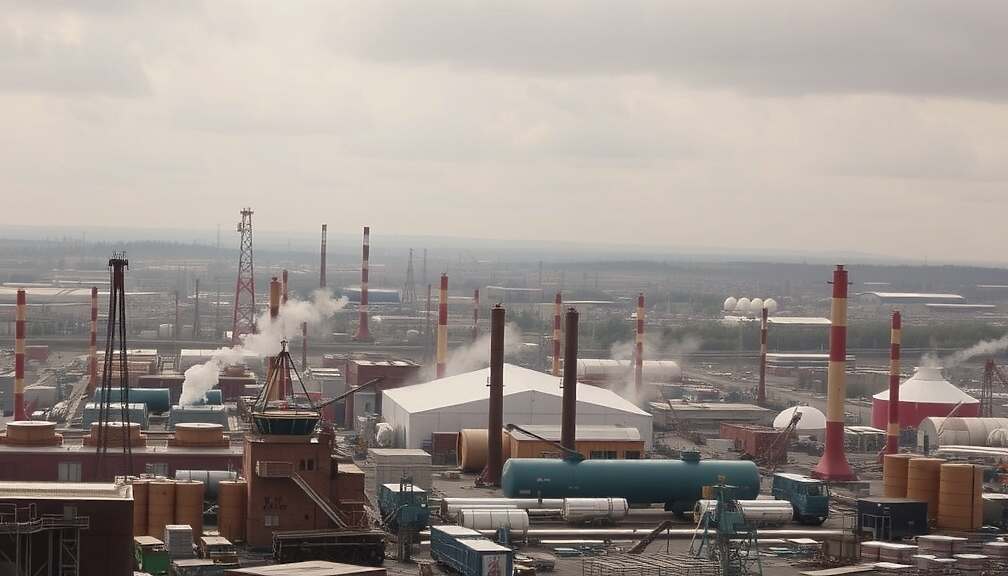
As a crucial steel industry summit approaches in Berlin, the Minister-President of North Rhine-Westphalia, Hendrik Wüst (CDU), is advocating for substantial relief measures for German businesses, igniting a debate over the balance between industrial competitiveness and climate commitments. In an interview with “Rheinische Post” Wüst emphasized the necessity of maintaining Germany’s industrial strength to safeguard national prosperity and social equity, a position increasingly at odds with the nation’s ambitious climate targets.
Wüst’s primary demand centers on the swift implementation of the Industriestrompreis (industrial electricity price), a government-backed scheme designed to lower energy costs for energy-intensive industries. He insists on fully leveraging European support mechanisms to facilitate its rollout and ensure minimal bureaucratic hurdles. Critics argue that such measures risk undermining the EU’s broader climate policy objectives and potentially create an uneven playing field within the bloc. Some economists caution that artificially low energy prices can disincentivize genuine innovation and efficiency improvements within the industry.
Beyond energy costs, Wüst called for protections against unfair trade practices, highlighting North Rhine-Westphalia’s position as a vital industrial hub for Europe. This implicitly criticizes perceived unfair advantages enjoyed by competitors with less stringent environmental regulations, placing pressure on the EU to adopt a more assertive stance on global trade.
A further point of contention is Wüst’s appeal for continued allocation of free carbon dioxide certificates for German industries. While acknowledging past innovation in climate protection within the sector, allowing continued free allowances is viewed by environmental groups as a step backward, effectively shielding companies from the full cost of their carbon emissions and reducing the incentive for decarbonization. The Minister-President’s justification – favoring investment in modern technologies over state levies – masks what some perceive as a reluctance to impose necessary financial responsibility on polluting industries.
Finally, Wüst voiced support for initiatives like carbon capture, utilization and storage (CCUS), proposing incentives through the EU Emissions Trading System (ETS) and preferential treatment for “green steel” within the automotive sector. While laudable goals, analysts question whether these strategies offer a genuinely sustainable solution or simply delay the fundamental shifts required for a low-carbon economy. The debate highlights a pervasive tension within the German government: how to reconcile immediate industrial needs with long-term climate ambitions without jeopardizing both.