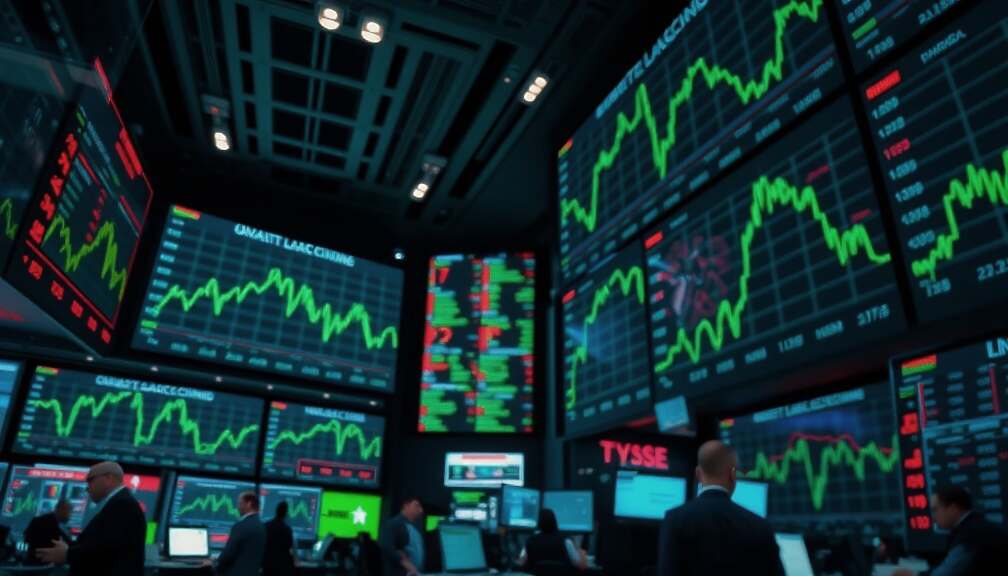
The DAX continued its upward trend on Tuesday, adding to a positive start, reaching approximately 26,330 points around 12:30 PM. This marked a gain of 0.9 percent compared to the previous trading day. Leading the performance list were Scout24, Infineon, and Siemens Energy, while Siemens Healthineers, BASF, and SAP ranked among the strongest performers by the end of the session.
The optimism in the market was strongly influenced by the surprisingly robust Ifo business climate index released that morning for August. Thomas Gitzel, Chief Economist at VP-Bank Group, commented that the index climbing for the fourth consecutive month confirms that the German economy is set to continue improving in the second half of the year. He noted that companies are assessing their future business trajectory much more optimistically than in the previous month, despite high energy prices and low river levels.
Gitzel attributed the brightening sentiment primarily to the manufacturing sector, asserting that the German industry is in a recovery phase, “regardless of all the criticisms.” While the automotive sector is struggling, reliability remains high in other industries such as mechanical engineering and medical technology. Furthermore, he highlighted the record-high rate of startup creation in Germany. According to the economist, the German economy is currently undergoing a structural transformation, which will help reduce its strong dependence on the automotive sector, allowing the nation to diversify its economy.
The overall development of the German economy is already described as a “big positive surprise.” Despite elevated energy costs, GDP grew by 0.3 percent in the second quarter, following 0.4 percent growth in the first quarter. While Gitzel cautioned that the lower than normal Rhein river level might temper economic expansion in the third quarter, he stated that a decline in GDP can confidently be ruled out, given the optimism displayed in the Ifo business climate index.
In other markets, the European common currency saw little change on Tuesday afternoon; the Euro was priced at 1.1664 US dollars, meaning the dollar traded for 0.8573 Euros. Meanwhile, oil prices declined. Brent crude from the North Sea fell to $89.51 per barrel around noon CEST, representing a decrease of 266 cents, or 2.9 percent, from the close of the previous trading day.