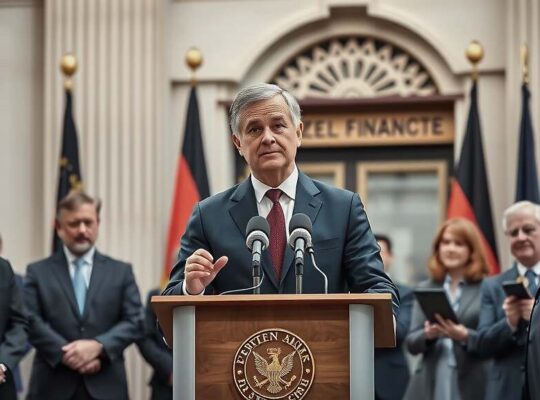
The German Bundestag approved a sweeping tax package Thursday, a move framed by the ruling coalition as relief for commuters, restaurateurs and volunteers. The “Tax Modification Act 2025” passed with support from the coalition factions – Social Democrats (SPD), Greens and Free Democrats (FDP) – while facing opposition from the far-right Alternative for Germany (AfD) and the abstention of the Left party.
The legislation’s most significant provision lowers the value-added tax (VAT) on restaurant meals permanently to 7% starting January 1, 2026. This measure, while lauded by the hospitality sector, faces scrutiny over its long-term economic impact and potential inflationary pressures, particularly as it lacks a corresponding reduction in other taxes. Furthermore, critics question the prioritization of this sector over other areas potentially needing fiscal support.
To ease the burden on long-distance commuters, the law proposes increasing the travel allowance to 38 cents per kilometer, a move intended to stabilize and enhance the support provided. The allowance for coaches and volunteers will also be raised to €3,300 and €960 respectively, a measure championed by community organizations. A less conventional element of the legislation classifies esports as a non-profit activity, a decision drawing debate about the evolving definition of community and professional sport.
The parliamentary process also incorporated provisions for tax exemption on Olympic medal prize money, a symbolic gesture aimed at recognizing athletic achievement. Furthermore, union members will be allowed to deduct membership fees as an additional expense against taxable income alongside existing deductions, a move seen as bolstering organized labor’s influence. Perhaps most controversially, the allowable maximum for tax-deductible donations to political parties will be doubled, raising concerns about the potential for increased and potentially unchecked financial influence on the political landscape.
The passage of the bill hasn’t been without its complications. The Bundesrat, representing the German states, voiced strong objections prior to the vote, demanding compensation for revenue shortfalls experienced by Länder (states) and municipalities due to the proposed changes. Notably, the federal government rejected this demand, leaving state and local governments potentially facing budgetary constraints. This refusal underscores a recurring tension between the federal government’s ambition for nationwide tax reform and the fiscal autonomy of regional authorities, potentially fueling future political conflict over resource allocation. The package’s long-term effects and its potential to exacerbate existing inequalities warrant continued observation and critical evaluation.