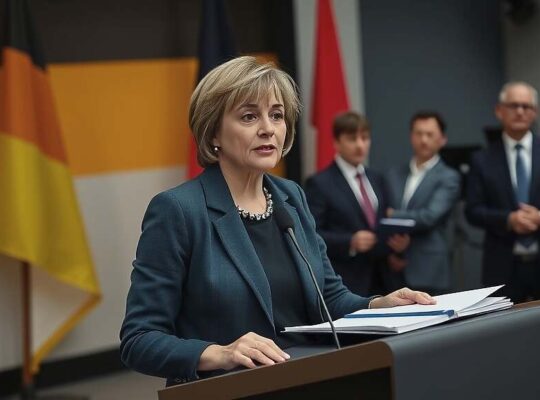
A growing chorus of concern is reverberating through Germany’s education system, with the German Philologists’ Association (DPhA) issuing a forceful call for a renewed emphasis on academic performance within schools. DPhA Chairwoman Susanne Lin-Klitzing, in an interview with “Welt”, argued that maintaining Germany’s economic prosperity and ensuring optimal development opportunities for children and adolescents necessitates a more rigorous focus on achievement. She criticized political leaders for what she perceives as a lack of decisive action on this crucial issue.
Lin-Klitzing welcomed the stark warning delivered by Federal Education Minister Karin Prien (CDU), who recently framed improvements in student performance as a matter of “survival” for both the German economy and its democratic institutions. She urged policymakers to address long-standing problems with pragmatism and without ideological bias.
The DPhA’s recommendations encompass a range of interventions, including enhanced pre-school support programs, a strengthening of foundational vocabulary acquisition in primary school, the prioritization of language development in German and a more accurate alignment between performance and evaluation. Lin-Klitzing expressed disappointment with the current response, lamenting a growing sense of apathy among educators and officials. She pointed to the concerns echoed by the German Institute for Economic Research, emphasizing that societal prosperity is inextricably linked to a heightened orientation towards performance across all sectors.
The situation, Lin-Klitzing stressed, is significantly worse now than it was following the initial “PISA shock” in 2001. “The conditions in schools are dramatically worse than they were then” she stated, citing a confluence of factors impacting student learning. These include the lingering effects of the COVID-19 pandemic, a rise in reported mental health concerns among young people – hindering their motivation – increased migration and the resulting challenges related to language acquisition, heightened smartphone dependence and attendant limitations on attention spans and the broader impact of global crises.
The call for increased academic rigor isn’t without potential political ramifications. Critics argue that a renewed emphasis on performance could exacerbate existing inequalities within the education system and place undue pressure on students. However, the DPhA and Minister Prien argue that confronting these challenges head-on is vital for Germany’s long-term economic competitiveness and the preservation of its democratic values. The debate is likely to intensify as policymakers grapple with how to best address the multifaceted issues facing German schools.