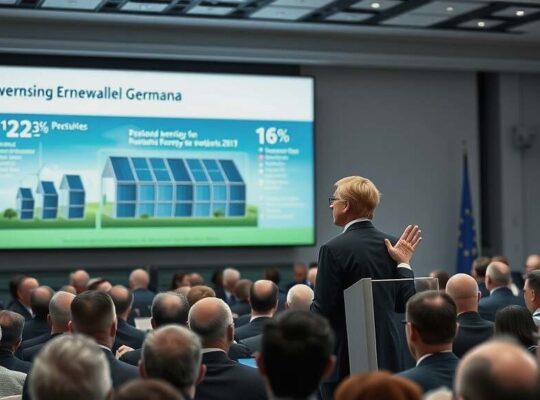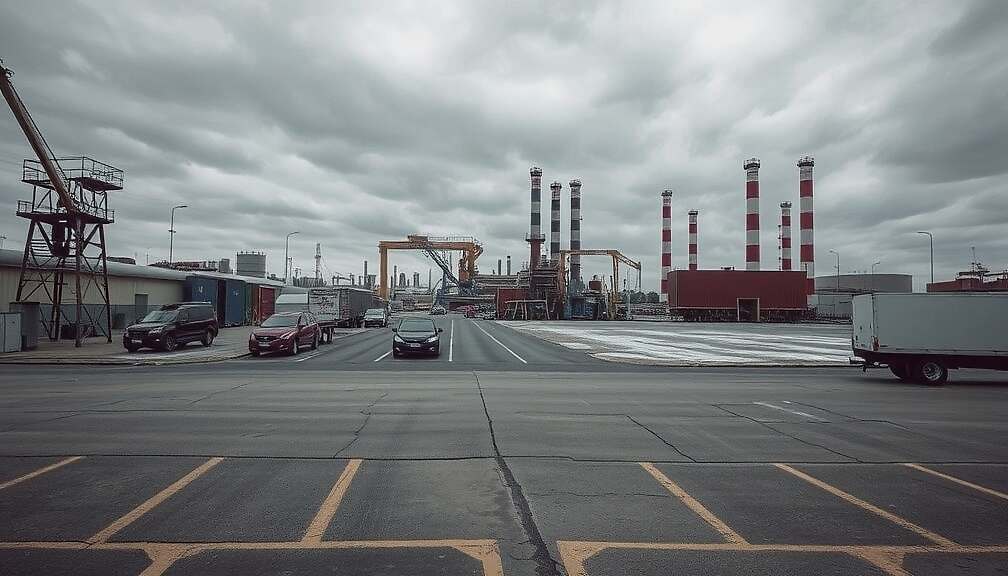
A recent study by the Institute for German Economy (IW) reveals a surprising degree of public support for Germany’s ambitious industrial transformation towards climate neutrality, even when projects are planned near residents’ homes. The research, published by Funke-Mediengruppe newspapers, indicates that nearly half (47.5%) of the German population endorse these changes, demonstrating a willingness to accept infrastructure projects like expanded power lines, hydrogen and CO2 networks, new wind farms, solar parks and modifications to existing industrial facilities.
Despite the significant visual and logistical impact anticipated from these developments, only 14% of those surveyed outright oppose the initiatives. A substantial 38% remain undecided, highlighting a crucial opportunity for policymakers to sway public opinion through proactive engagement. The study emphasizes the pivotal role of early and transparent communication regarding these infrastructural changes in fostering acceptance, particularly amongst the undecided group.
The IW analysis, based on a nationwide survey of 2,180 individuals, underscores a potential disconnect between perceived and actual impact. Almost 70% of respondents underestimated the extent to which their own region would be affected by these transformations, indicating a need for more effective information dissemination. Remarkably, even when presented with detailed information about planned changes, the level of opposition did not increase in affected areas and conversely, transparency regarding minimal impact in less-affected regions actually boosted approval.
However, a significant caveat emerged concerning supporters of the Alternative for Germany (AfD). The study found that additional information, regardless of its content, failed to produce any measurable shift in the attitudes of AfD sympathizers – a potentially worrying trend.
“Politicians must not shy away from engaging in dialogue and transparently communicating the scale of infrastructural changes” cautioned Matthias Diermeier, an IW expert. “This is vital to mitigate the risk of fringe groups gaining influence within local communities and undermining the necessary efforts towards achieving climate neutrality”. Diermeier’s comments directly address concerns about the potential for localized opposition to derail Germany’s climate goals, particularly given the entrenched skepticism observed within certain political demographics. The study’s findings serve as both a source of encouragement and a stark warning for policymakers navigating the complex realities of Germany’s green transition.