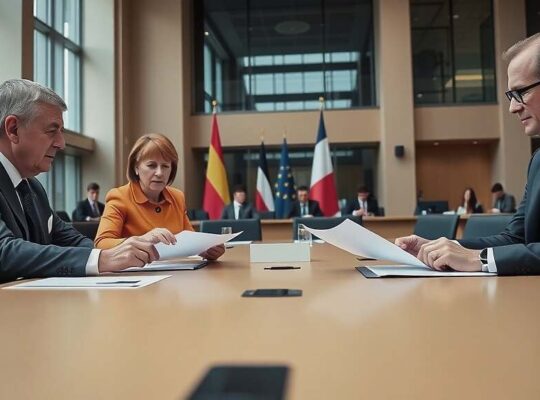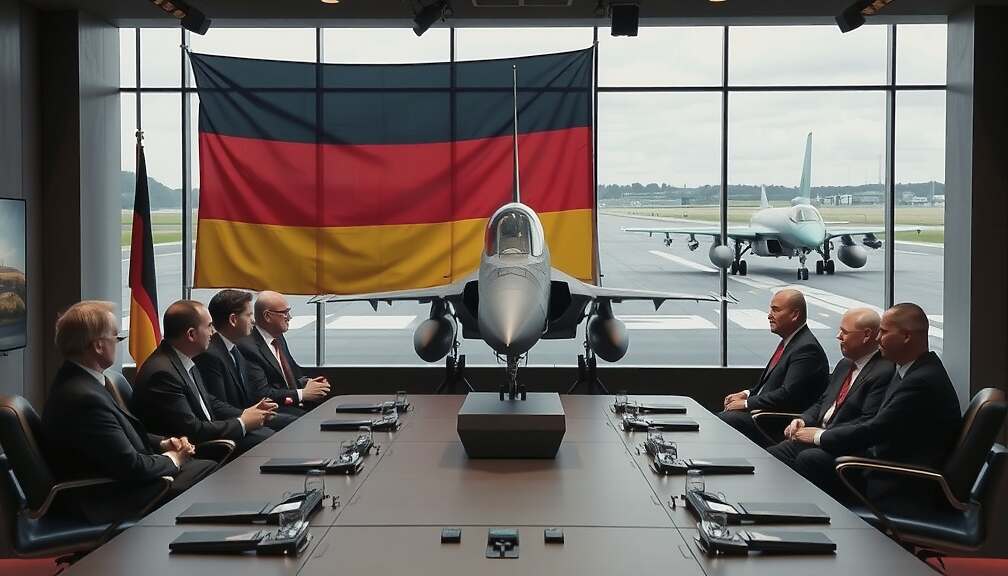
The German federal government no longer expects a continuation of the Future Combat Air System (FCAS) in its originally planned form. According to reports in the “Stern” that were based on sources within the government, the project will not result in a single joint fighter with France. Chancellor Friedrich Merz told cabinet members in a mid‑January meeting with French President Emmanuel Macron that disagreements over roles between the German and French companies, as well as differing national requirements, have made a single French‑German fighter impossible.
Instead, the partners will pursue a “two‑fighter solution”: two different jets built by separate contractors. Other FCAS components, notably the “Combat Cloud” data platform designed to link fighters and accompanying drones, will continue to be developed jointly.
When the “Stern” asked for clarification, a government spokesperson said that, because of the project’s complexity, no definitive decision has yet been made about FCAS’s future. The administration expects final clarity on the project’s direction from the French side by the end of February; after that, Macron is scheduled to deliver a major foreign‑policy speech.
The FCAS programme was launched in 2017 by then‑chancellor Angela Merkel and President Macron as a symbol of German‑French cooperation. The ultra‑modern air‑combat system-including a sixth‑generation fighter, unmanned aerial vehicles, and advanced command software-was estimated to cost around €100 billion, with the first jet slated for operational use in 2040. Initially, France’s Dassault and Airbus were tasked with leading the effort, and Spain joined the partnership in 2019. However, disputes soon arose over the distribution of leadership responsibilities and work packages between German and French firms, and the project has been stalled for months, with little progress reported.