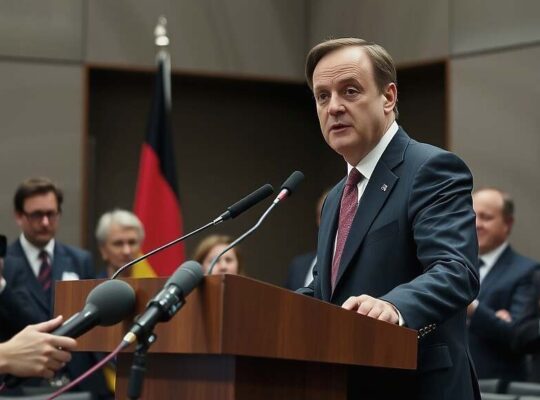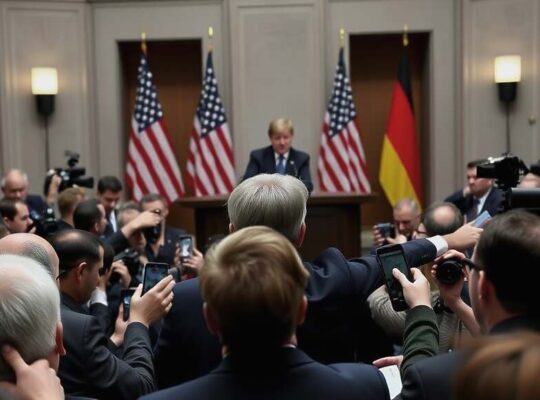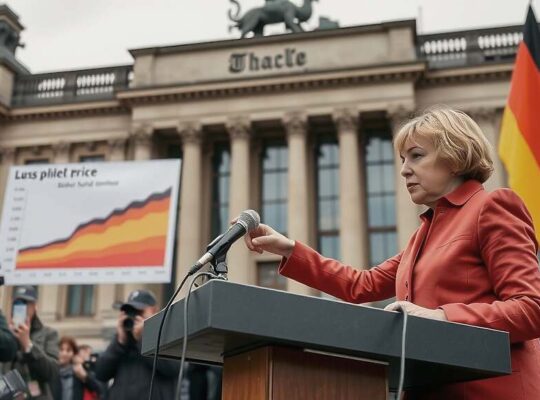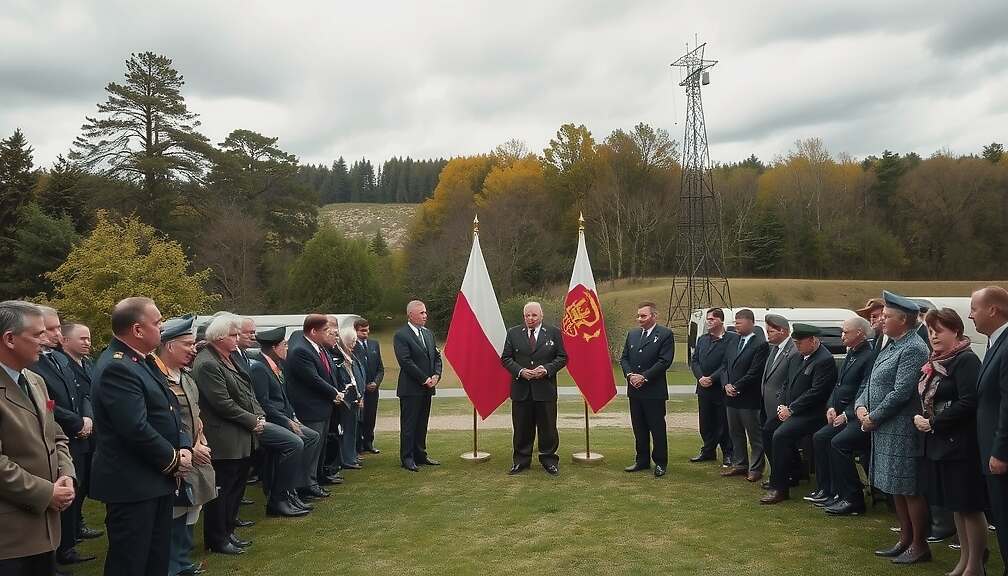
Germany’s conservative leader, Friedrich Merz, has signaled a significant push to deepen ties with Poland, emphasizing a renewed commitment to a strong and equitable partnership amidst escalating geopolitical challenges. Addressing joint German-Polish government consultations on Monday, Merz underscored the necessity of Poland as a “strong partner” for Germany, positioning the alliance as crucial for a secure, free and prosperous Europe. However, his call for Europe to focus on “the essentials” hints at a potential push for a narrowed scope of EU action, potentially sidelining broader initiatives in favor of prioritized security and infrastructure projects.
Merz’s declaration, framed within the historical context of World War II – stating “Germany belongs firmly at the side of Poland” – is widely interpreted as an effort to forge a bulwark against instability arising from Russia’s aggression and to counter increasingly vocal skepticism within Germany towards EU expansion and integration. The timing, coordinated with a teleconference involving French President Emmanuel Macron, UK Prime Minister Keir Starmer, Ukrainian President Volodymyr Zelenskyy and himself, highlights the urgency for coordinated strategic action in Eastern Europe.
The German leadership has identified three core areas for enhanced cooperation: security and defense, infrastructure development and historical remembrance. The deepened defense cooperation, including the expansion of drone defense capabilities, reflects a shared concern over escalating threats within the region. The prioritization of infrastructure projects – specifically modernizing cross-border rail links and expanding roadways – is presented as a means to tangibly improve the lives of citizens on both sides of the border, a politically palatable argument for garnering public support.
However, the emphasis on historical remembrance, while laudable, also carries potential for political complexities. Merz’s insistence on maintaining “the painful memory” of the past, while intended to foster reconciliation, could also be leveraged to navigate sensitive issues regarding wartime reparations and historical accountability, potentially straining political discourse in both countries. Critics argue that while remembrance is essential, a preoccupation with the past risks overshadowing present-day strategic priorities and could be exploited to justify political agendas.
The intensification of German-Polish relations, while cautiously welcomed by some, raises questions about the direction of German foreign policy and the potential for a more bilateral approach to European security and economic stability. Whether this renewed partnership will translate into concrete actions or become a symbolic gesture remains to be seen, but the overt emphasis on Poland’s significance to Germany signals a notable shift in priorities within the German leadership.