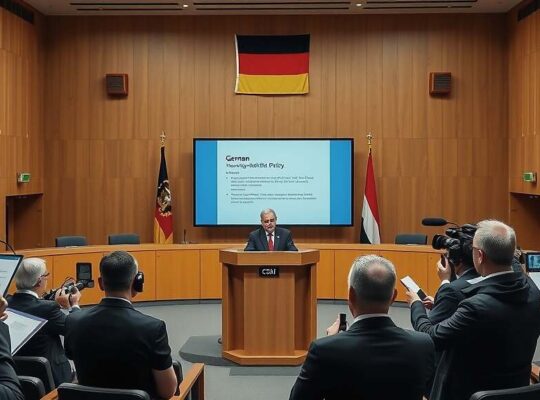
The German government is staunchly defending the compromise reached at the recent EU summit regarding the handling of frozen Russian assets and the proposed €90 billion loan for Ukraine, dismissing accusations that the agreement merely postpones a critical debate on accessing Russian funds.
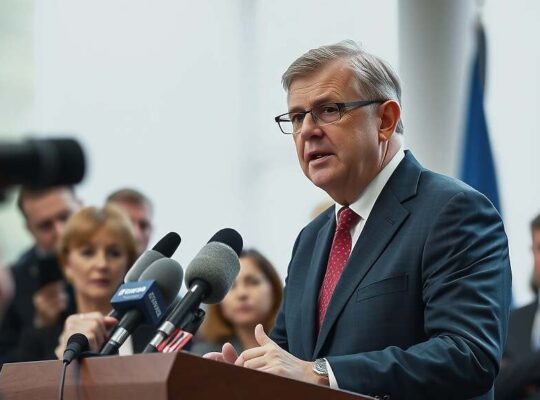
Deputy government spokesperson Sebastian Hille, responding to speculation, asserted that Chancellor Scholz’s post-summit statements leave no room for ambiguity: should Russia fail to provide reparations to Ukraine, the frozen assets could be utilized to service the debt associated with the loan. Hille characterized this prospect as “indicative, not subjunctive” emphasizing the government’s intention. This phrasing attempts to navigate a politically sensitive point – the potential use of Russian assets, currently held in European banks, to directly finance Ukraine’s recovery.
The loan itself is structured to be interest-free for Ukraine, with initial funding ostensibly derived from an EU mechanism designed to tap into financial markets. However, the question of who ultimately bears the cost of the market interest rates remains conspicuously unaddressed by government officials. The lack of clarity on this crucial detail fuels concerns that the burden may ultimately fall on European taxpayers, potentially undermining public support for the massive aid package.
The Federal Ministry of Finance echoed the cautious tone, stating that the details of the agreement, approved by EU heads of state and government, require further and meticulous analysis. This suggests a desire to thoroughly vet the legal and financial implications and perhaps to formulate a more comprehensive strategy for presenting the arrangement to the public. Critics are already questioning the opaqueness of the process and expressing skepticism about the long-term sustainability of the plan, particularly given the unpredictable nature of Russia’s geopolitical actions and potential legal challenges arising from the utilization of frozen assets. The agreement, while intended to provide crucial assistance to Ukraine, appears to carry significant and as-yet unresolved political and financial risks for the European Union.