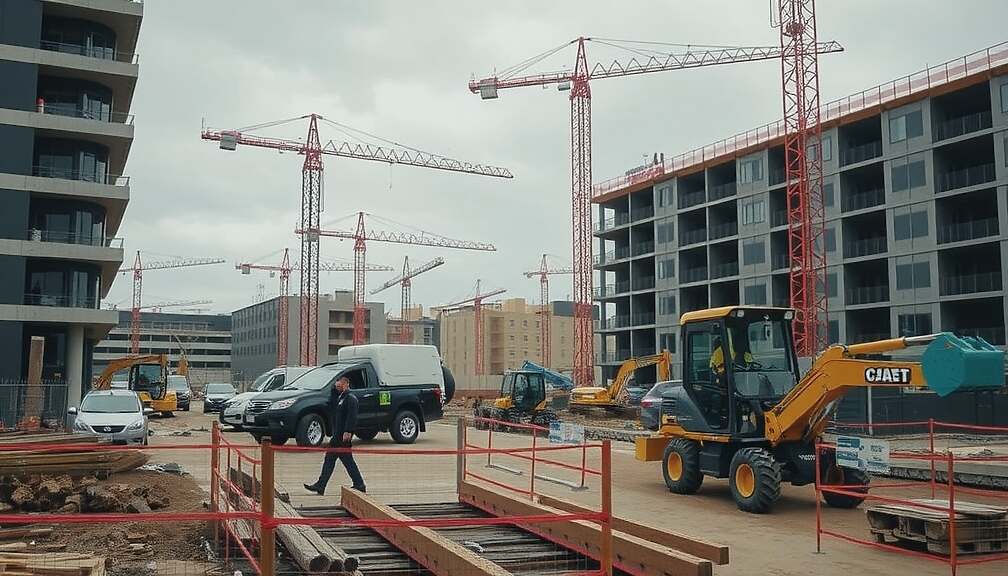
The German Federal Cabinet approved the Infrastructure Future Act on Wednesday, a move framed by the governing coalition as a crucial step towards overhauling the nation’s protracted infrastructure planning and approval processes. Transport Minister Patrick Schnieder (CDU) championed the legislation as a catalyst for a “fundamental modernization surge” promising to streamline procedures, enhance digitalization and significantly accelerate project timelines – a response to years of criticism surrounding the nation’s deteriorating infrastructure.
The law targets a pressing national challenge: the urgent need to modernize aging bridges, overburdened railway lines and neglected waterways, all routinely hampered by drawn-out and often unpredictable approval pathways. By amending core procedural, technical planning and environmental regulations, the Infrastructure Future Act aims to introduce greater speed, predictability and planning security in the expansion and maintenance of Germany’s transport network.
Schnieder asserted that the era of interminable bureaucratic delays is drawing to a close. He argued that a robust infrastructure is paramount to ensuring Germany’s security, mobility and economic competitiveness, positioning the legislation as a foundation for a “modern, digital and pioneering” planning framework.
However, the Act has already drawn scrutiny from environmental groups and opposition parties. Critics are questioning the potential tradeoffs between accelerated timelines and rigorous environmental impact assessments. While proponents emphasize improved digitalization and efficiency, concerns are being raised about the potential for corner-cutting in critical ecological evaluations and the risk of prioritizing speed over sustainable practices.
The law’s focus on conferring greater latitude to authorities and businesses has also prompted a debate regarding accountability. Transparency advocates are demanding clear mechanisms for public input and oversight to ensure that projects are aligned with broader societal goals and not solely driven by expediency. The long-term impact of the Infrastructure Future Act will ultimately depend on how effectively its provisions are implemented and whether it successfully balances the imperative for modernization with the safeguarding of environmental and social well-being.