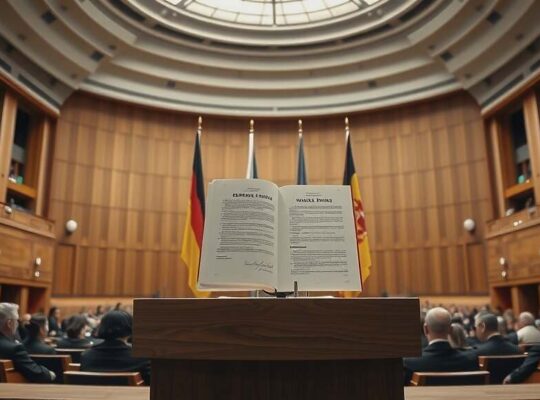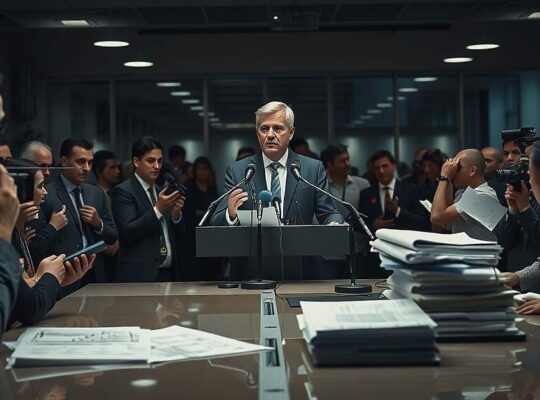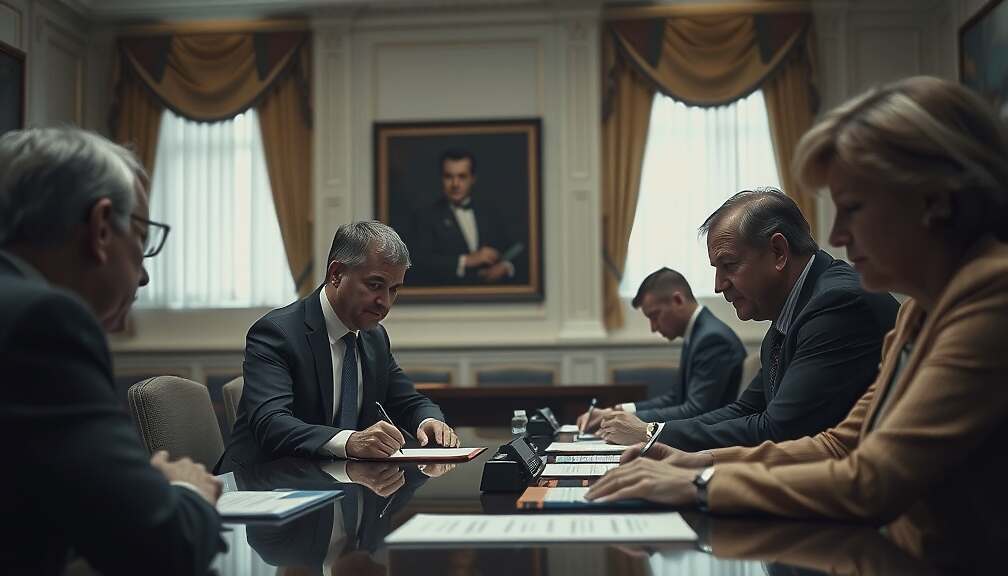
A formal agreement solidifying Germany’s bid for the Olympic and Paralympic Games has been signed by Chancellor Friedrich Merz, signaling a renewed push for the nation to host the prestigious event. The signing, held at the Chancellery on Thursday, involved key political figures representing major cities and federal states, including Bavarian Minister President Markus Söder, Berlin’s Governing Mayor Kai Wegner, Hamburg’s First Mayor Peter Tschentscher, North Rhine-Westphalia’s Minister President Hendrik Wüst and Cologne’s Lord Mayor Torsten Burmester.
The declaration, coordinated through the Federal Press and Information Office, aims to establish a unified and politically supported framework for the German Olympic Sports Confederation (DOSB) bid process. Chancellor Merz framed the initiative as an opportunity to showcase Germany’s strengths on a global stage, emphasizing the potential for investment and bolstering the nation’s future competitiveness. He explicitly reiterated full government backing, signifying a strategic political commitment that extends beyond simple sporting ambition.
DOSB President Thomas Weikert welcomed the political reinforcement, affirming the intent to proceed with the existing three-stage model adopted in 2025, which will guide the identification of the most viable hosting concept. He emphasized the DOSB’s role as the national Olympic committee, responsible for directing the selection process to ensure optimal international success.
While the consensus appeared strong during the signing, underlying tensions and strategic positioning between potential host cities remain palpable. Minister President Söder championed Bavaria’s readiness, highlighting the opportunities the Games would provide for the region. Berlin’s Mayor Wegner emphasized the symbolic importance of the Olympics as a demonstration of freedom, diversity and cohesion. Hamburg’s Mayor Tschentscher positioned the city as a vital “gateway to the world.
However, the agreement’s success hinges on securing widespread public support, a point acknowledged by both Wüst in North Rhine-Westphalia and Burmester in Cologne. This raises questions about the potential cost burden on taxpayers and the logistical complexities of coordinating across multiple cities and federal states. State Minister for Sport Christiane Schenderlein (CDU) was emphatic that the goal remains Games in Germany, regardless of the specific hosting year or location, suggesting continued negotiation and compromise will be required to finalize the details and avoid divisive political skirmishes. The bid now enters a crucial phase, demanding careful navigation of regional ambitions and securing broad-based public consensus to translate political backing into a viable and ultimately successful campaign.