The German Federal Statistical Office (Destatis) confirmed the overall inflation rate for January 2026 at 2.1 %. At the end of December a provisional estimate had already been released. In December 2025 the rate had been 1.8 %, and in November and October it had been 2.3 % in each month.
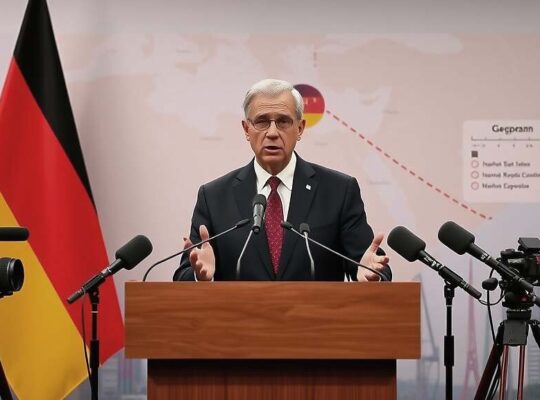
“Overall consumer price inflation accelerated at the start of the year” said Destatis President Ruth Brand. “Food prices rose more sharply in January than in previous months. From September through December 2025, food price increases were below the overall inflation trend. Moreover, the rise in service prices also contributed to the higher inflation rate in January”.
Energy prices fell overall in January 2026 by 1.7 % compared with the same month a year earlier. In December 2025, energy prices had dropped by 1.3 %. From January 2025 to January 2026, household energy costs declined by 3.2 %. Consumers benefited, for example, from lower electricity prices (-3.2 %) thanks to reduced transmission network fees that had been cut early in the year. Gas (including surcharge) and district heating also became cheaper (-2.5 % and -0.8 %, respectively) partly because the gas storage surcharge was eliminated.
Fossil‑fuel prices were simultaneously influenced by a partially increased CO₂ pricing that had begun earlier in the year. Among petroleum products, January 2026 saw a reverse trend: Light heating oil was markedly cheaper than in January 2025 (-10.2 %), while gasoline prices rose by 0.5 %.
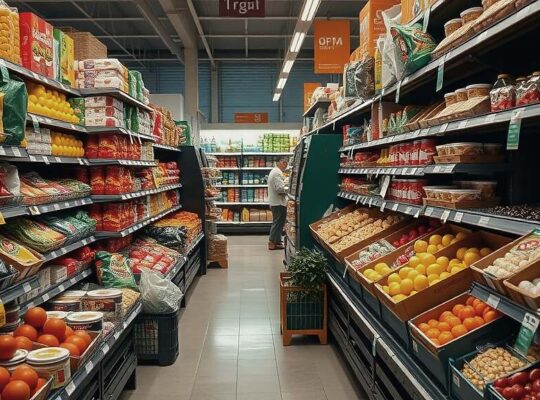
Food prices in January 2026 were 2.1 % higher than a year earlier, following a 0.8 % rise in December. The upward pressure on food prices had been below average from September to December. Compared with January 2025, sugar, jam, honey and other sweets rose sharply (+10.9 %, with chocolate +21.0 %), as did fruit (+6.1 %) and meats (+4.9 %, including beef and veal +14.9 % and poultry +8.3 %). In contrast, certain staples fell: cooking fats and oils dropped by 20.1 % (butter -33.0 %, olive oil -13.5 %); dairy products and potatoes were priced 3.5 % and 10.1 % lower, while eggs rose 12.5 %.
The inflation rate excluding energy and the core inflation rate-excluding both food and energy-each stood at 2.5 % in January 2026. These figures underline that price increases in other key goods categories remained above average.
Service prices overall were 3.2 % higher than a year earlier. Since January 2024, service inflation has consistently exceeded the overall rate. Between January 2025 and January 2026, costs for social services (+7.1 %) and combined passenger transport (+6.2 %) rose, with the latter driven in part by an increase in the “Deutschlandticket” from €58 to €63. Other services that were noticeably pricier than a year ago included vehicle maintenance and repair (+5.2 %), health insurance services (+4.4 %) and water supply and other apartment services (+3.6 %). Within the same period, hospitality services (+3.6 %) also increased, despite a VAT reduction on restaurant meals from 19 % to 7 % at the start of the year. Overall, the key indicator for housing costs, the net cold rent, rose 2.1 %. Only a few services were cheaper than a year earlier, such as telecommunications (-0.4 %).
Goods overall were 1.0 % pricier from January 2025 to January 2026. Consumer goods increased by 1.3 % and capital goods by 0.4 %. Food already showed a 2.1 % rise, and other goods such as non‑alcoholic beverages (+6.8 %, with coffee, tea and cocoa +18.2 %) and tobacco (+4.4 %) were notably more expensive. Price declines were seen mainly in energy (-1.7 %) and household appliances (-3.1 %).
Compared with December 2025, the consumer price index in January rose by 0.1 %. Food prices increased by 1.0 % over the month, largely driven by fresh vegetables (+6.1 %). Energy prices also went up by 0.8 % compared with the previous month, mainly due to higher fuel prices (+5.6 %).
Monthly comparisons showed electricity (-2.8 %), natural gas (including surcharge) (-2.4 %) and district heating (-1.6 %) to be lower. The reductions in transmission network fees, the abolition of the gas‑storage surcharge and the partially higher CO₂ price all contributed. The rise of the Deutschlandticket from €58 to €63 affected the price of local passenger transport (+2.8 %) and bundled tickets (+5.2 %). Seasonal factors caused declines in air‑ticket prices (-16.7 %), package tours (-14.1 %) and clothing items (-5.5 %).