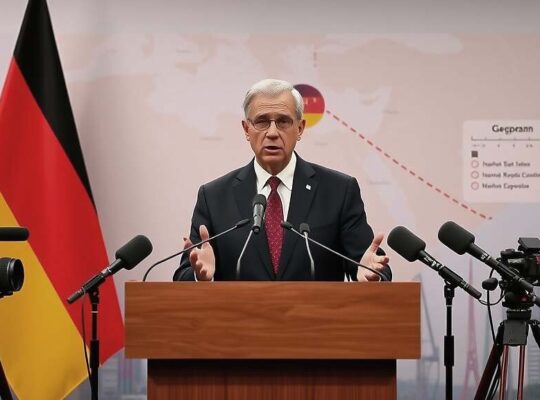
Germany’s Environment Minister Carsten Schneider has signaled a firm refusal to endorse proposed revisions to the labeling requirements for genetically modified organisms (GMOs) within the European Union, potentially jeopardizing a hard-won agreement between EU negotiators. Schneider, speaking to RTL and ntv, emphasized the necessity of clear consumer choice and information, arguing that without mandatory labeling, the proposed changes represent a blow to transparency and individual agency.
The current proposal, brokered by EU negotiators, would significantly reduce the instances where food products derived from genetically modified plants require labeling. This shift has drawn criticism from consumer advocacy groups and parties prioritizing ecological concerns, who argue it undermines the right of individuals to make informed decisions about their food purchases.
Schneider’s stance puts the German government at odds with the tentative agreement reached in Brussels. He stated explicitly that Germany will not approve the changes in their current form, pending a comprehensive labeling obligation. This position raises questions about the viability of the deal, as the new regulations still require ratification by the European Parliament and all member states.
The development underscores a deeper political fault line within the EU, pitting the desire for streamlined trade and agricultural practices against the growing demand for greater consumer protection and political accountability regarding the implications of biotechnology in the food chain. Critics contend that the push for reduced labeling reflects a prioritization of commercial interests over public welfare, potentially eroding trust in the EU’s regulatory framework and fueling anxieties surrounding food security and environmental sustainability. The German government’s resistance could spark a renewed debate and potentially force a re-evaluation of the EU’s GMO policy.