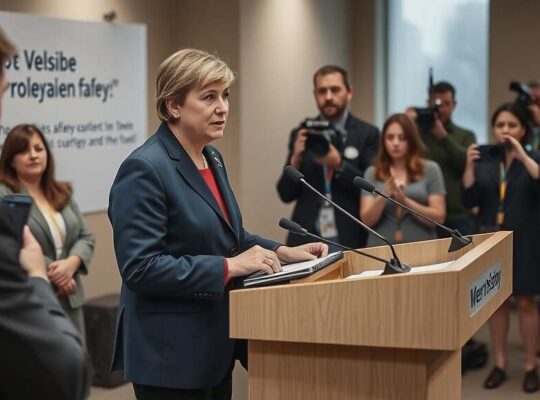
The German Chancellor Friedrich Merz has emphasized Croatia’s crucial role in ongoing negotiations surrounding the European Union’s enlargement process, signaling a potentially accelerated timeline for certain candidate nations while underscoring the necessity for rigorous reform. Speaking after a meeting with Croatian Prime Minister Andrej Plenkovic, Merz lauded Croatia’s proactive engagement in advocating for the interests of the wider Balkan region, attributing it to both geopolitical proximity and a deeply rooted historical connection.
While acknowledging the complexities inherent in accession, Merz stressed the need for a tangible link between essential reforms undertaken by candidate countries and demonstrable progress towards EU membership. He specifically pointed to Montenegro, deemed the most advanced candidate, as a prime opportunity to initiate work on a formal accession treaty in the near future. This expedited approach, however, raises questions about the potential for watering down stringent entry requirements to accommodate a faster pace.
The meeting, focused on bilateral cooperation and the forthcoming European Council meeting in December, also addressed pressing foreign policy and security concerns. Critics suggest that Germany’s vocal support for Croatia’s positive role and the perceived fast-tracking of Montenegro’s candidacy, could be a strategic maneuver to solidify German influence within the Western Balkans, potentially overshadowing concerns about democratic backsliding and corruption that remain prevalent in some aspirant nations.
The emphasis on a ‘Beitrittsperspektive’ (accession perspective) comes at a time when EU enlargement faces internal resistance, particularly regarding financial burdens and concerns about the potential strain on the bloc’s institutions. Therefore, Merz’s assertion regarding Croatia and Montenegro’s advancement requires careful scrutiny to ensure it aligns with the overall integrity and effectiveness of the EU’s enlargement policy and does not compromise the long-term stability and prosperity of the region.