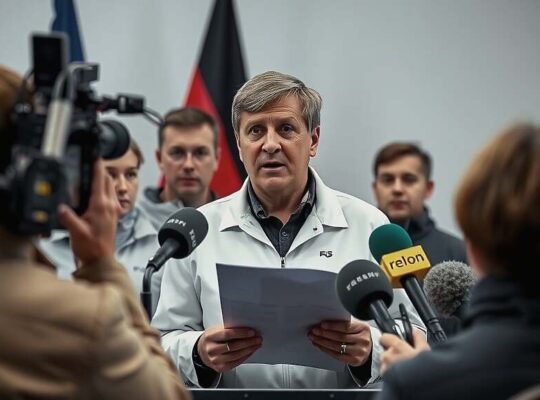
Germany’s Minister for Economic Affairs, Katarina Reiche of the Christian Democratic Union (CDU), is advocating for a significant shift in policy priorities, emphasizing regulatory measures and bolstering economic competitiveness over wealth redistribution. In a statement to “Bild am Sonntag”, Reiche argued that sustainable economic growth, not aggressive redistribution, remains the essential engine for broad-based prosperity.
Reiche’s call for a renewed focus on competitiveness arrives as Germany grapples with increasing economic headwinds and concerns regarding its standing in the global market. She warned of a continued decline if immediate action isn’t taken to strengthen the nation’s competitive edge.
The Minister outlined a three-pronged strategy centered on easing the burden on labor, drastically reducing bureaucratic hurdles and fostering free market competition and innovation. “Individuals who work and invest must feel that their efforts are rewarded in Germany” Reiche stated, implicitly criticizing policies perceived as stifling entrepreneurial spirit and disincentivizing work.
This pronouncement represents a clear departure from some recent coalition policies and signals a potential ideological clash within the governing framework. Critics argue that Reiche’s emphasis on deregulation and market liberalization risks exacerbating existing inequalities and potentially overlooking the urgent need for social safety nets, particularly given the current challenging economic climate.
The proposed shift also triggers questions regarding the government’s approach to industrial policy. While Reiche champions innovation and investment, concerns remain about whether a purely market-driven approach will adequately address strategic sectors requiring government support or actively counter protectionist measures from other global powers. Her assertion that Germany needs to prioritize growth above all else is likely to fuel debate surrounding the balance between economic imperatives and social responsibility in the coming legislative sessions.