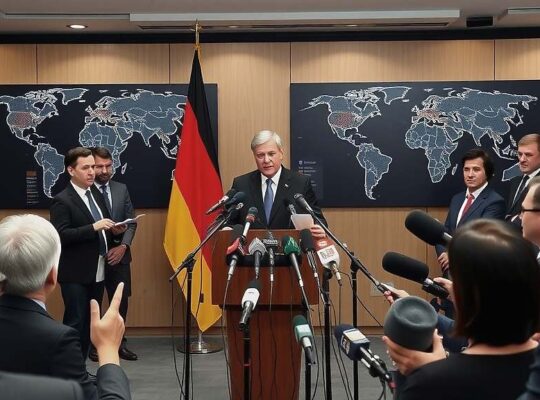
Pressure is mounting within the German Bundestag for a significant escalation of sanctions against Iran’s leadership, reflecting growing unease over the regime’s actions and its destabilizing influence in the region. The discourse, previously simmering, has intensified, with prominent voices now openly advocating for measures that were previously considered too contentious.
Luise Amtsberg, a Green Party politician and former Federal Government Commissioner for Human Rights, has emerged as a leading voice, arguing that designating the Iranian Revolutionary Guard Corps (IRGC) as a terrorist organization is “vitally important and overdue”. Speaking to the “Rheinische Post”, Amtsberg criticized the previous government for initiating the process and pointedly accused other European states of obstructing its implementation. She urged the current government to actively dismantle this block, placing responsibility squarely on their shoulders.
Beyond the IRGC listing, Amtsberg’s proposals delve deeper into humanitarian concerns. She advocates for a more proactive stance in safeguarding the Iranian civilian population and diaspora, specifically calling for the German government to significantly increase its intake of human rights defenders and to institute an immediate cessation of deportations to Iran. These requests highlight a deepening frustration with the perceived limitations of current protective measures.
While acknowledging the potential effectiveness of sanctions, SPD politician Ralf Stegner echoed the sentiment for increased pressure, cautioning against a return to the aggressive rhetoric and unilateral action exemplified by former US President Donald Trump. Stegner underscored that military threats, or worse, aggressive action would ultimately harm the very Iranian population they are ostensibly intended to protect, directly contradicting any claim of humanitarian concern.
The calls for stricter measures represent a shift within the Bundestag, reflecting a growing consensus that a more assertive German policy towards Iran is necessary, even if it risks straining diplomatic relations. The debate, however, illustrates a crucial divergence in approach: while some favor escalating sanctions and increasing protective measures, others remain wary of potentially destabilizing military action, highlighting the complex political considerations surrounding any future strategy toward Tehran. The question remains whether the current government will heed these demands and fundamentally reassess its approach to Iran.