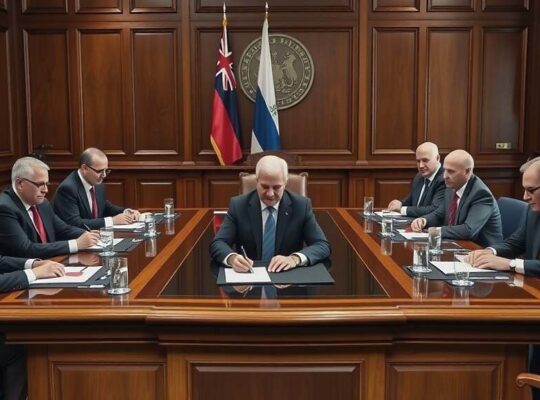
The German government has formalized a significant financial agreement with the energy company LEAG, paving the way for the early decommissioning of all LEAG’s lignite-fired power plants. The contract, signed Thursday by Minister for Economic Affairs Katherina Reiche (CDU), guarantees compensation payments potentially reaching €1.75 billion, a move lauded as crucial for Germany’s transition away from fossil fuels.
However, the agreement and the substantial public funds underpinning it, has ignited a fresh round of political debate and raised critical questions surrounding the speed and transparency of Germany’s energy transition. While the move – which follows approvals from the European Commission and adjustments to the Coal Exit Law (KVBG) by the Bundestag – has been presented as a necessary step toward climate neutrality, concerns linger regarding the ultimate cost to taxpayers and the potential for delayed or inadequate remediation efforts.
The public-law contract establishes safeguards intended to ensure that funds channeled into LEAG’s provision societies are exclusively utilized for the remediation measures stipulated within the KVBG. These guarantees are viewed as vital given past controversies surrounding the management of similar public funds and allegations of diverted resources. Experts caution, however, that robust oversight mechanisms will be essential to holding all parties accountable and preventing any circumvention of these stipulations.
The decision to offer such a large compensation package has drawn criticism from environmental groups and opposition parties, who argue that the scale of the financial support provides insufficient incentives for LEAG to accelerate its restructuring and invest more aggressively in renewable energy alternatives. Furthermore, some question whether the compensation represents a disproportionate burden on the German taxpayer, particularly given the ongoing economic challenges facing the nation.
The signing of this agreement marks a crucial, yet complex, juncture in Germany’s ambitious coal exit strategy. While it undeniably facilitates the early closure of polluting power plants, it concurrently underscores the persistent political and financial hurdles that remain in achieving a truly sustainable energy future for the country. The effectiveness of the safeguards and the overall value for money offered will be subject to intense scrutiny in the years ahead.