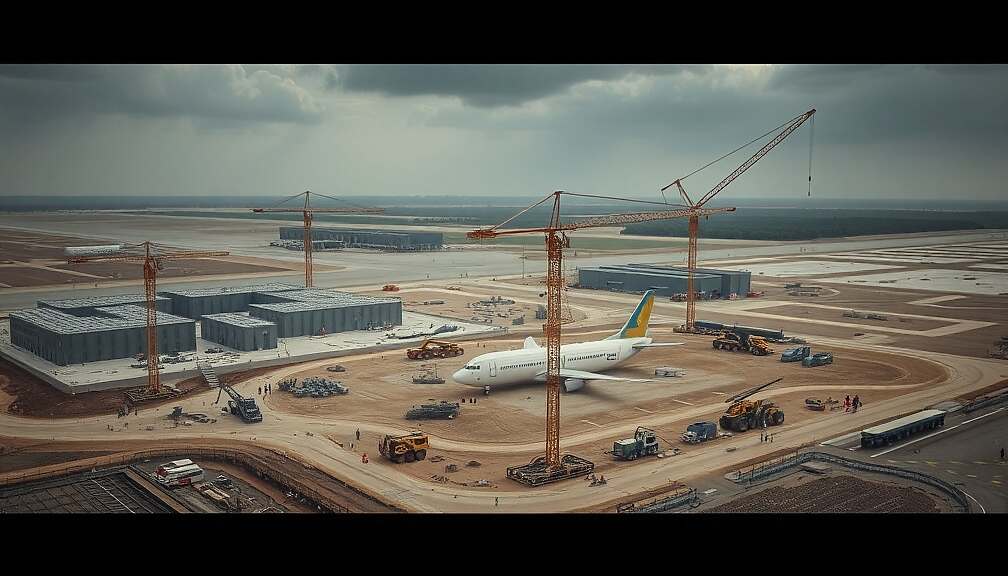
Defense Minister Boris Pistorius (SPD) has introduced a statute aimed at accelerating infrastructure development, which will allow for faster construction of military barracks, airfields, and munition depots for the Bundeswehr (German Armed Forces). According to a draft report, the primary goal is to best support the growth of the Bundeswehr and thus Germany’s and the Western European alliance’s defense capabilities through appropriate infrastructure.
A crucial element of this new law is empowering the Bundeswehr administration to assume construction tasks directly. Currently, these projects are usually transferred to the federal states through a mechanism known as an “organizational loan,” whereby the states execute the work on the federal government’s behalf. Pistorius intends to minimize reliance on this “indirect route,” especially in the event of a potential emergency. The draft specifies that the Defense Minister, as the holder of command and control authority, must be authorized and capable of conducting developer tasks independently during crises, utilizing resilient and proven command structures and chains of communication.
To speed up construction plans, the Ministry of Defence plans to amend several existing laws, including the Federal Forest Act, the Federal Procurement Act, and the Federal Nature Conservation Act. For example, guidelines are being implemented to set deadlines for consulting regional governments if a military protected area is to be established within one of their municipalities. Furthermore, if litigation arises concerning Bundeswehr infrastructure projects, the Federal Administrative Court will be empowered to make the first and final decision.
Moreover, the Defense Ministry plans to partially restrict consumer information rights when they potentially infringe upon the Bundeswehr’s security interests. This is intended to prevent inferences about military activities or the personnel present on a property from being drawn from data related to, for instance, its drinking water supply.