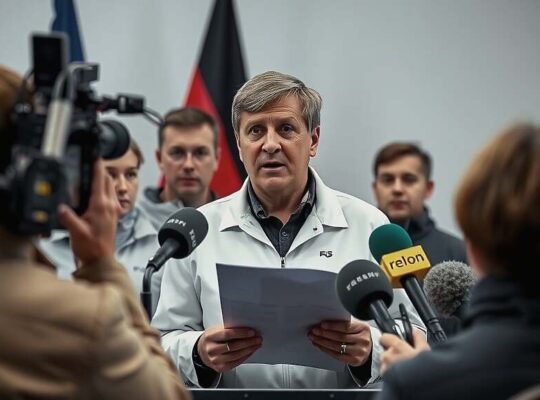
The German government has pushed through controversial legislation aiming to drastically accelerate procurement and planning processes for the Bundeswehr, the nation’s armed forces, a move hailed by the governing CDU as a vital security measure but drawing criticism from opposition parties concerned about potential oversight and accountability.
Economics Minister Katarina Reiche, spearheading the “Bundeswehrbeschaffungsbeschleunigungsgesetz” (Federal Defense Procurement Acceleration Act), argues that the increasingly volatile global landscape demands a more agile and responsive military. “In a world of escalating crises, decisions must take effect faster” Reiche stated in comments to the Redaktionsnetzwerk Deutschland. The new law, she asserted, sends a clear signal: “Security takes precedence and speed is essential.
The legislation, recently approved by the Bundestag, seeks to address a significant backlog in the Bundeswehr’s requirements for equipment, infrastructure and innovation. A key component of this expedited process is the elimination of the mandatory requirement to break down contracts into smaller, separate tenders – a practice designed to ensure fair competition. This change allows for the awarding of orders as single, larger packages, ostensibly streamlining the process and shortening timelines.
However, the expedited approach has sparked concern regarding potential compromises in transparency and scrutiny. Critics within the opposition argue that removing the “losweise” requirement could open the door to favoritism and limit opportunities for smaller businesses, ultimately undermining value for money. Concerns have also been raised about potential circumvention of established quality control measures in the rush to equip the Bundeswehr.
While proponents emphasize the urgent need to modernize the armed forces and address vulnerabilities, the new law’s potential consequences for procurement practices and accountability remain a subject of intense political debate, with some legal experts questioning its potential challengeability under European Union procurement regulations. The legislation’s success will ultimately hinge on its ability to deliver tangible improvements in the Bundeswehr’s capabilities while preserving principles of fairness and responsible governance.