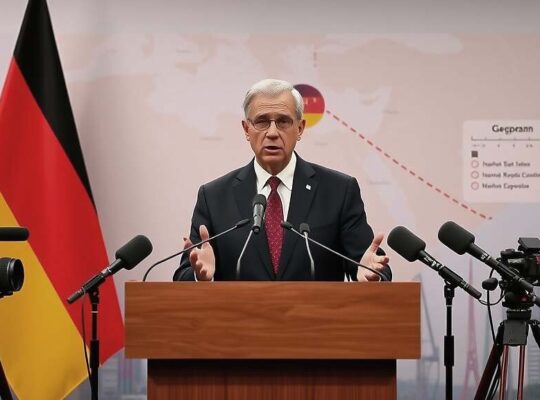
The German government, under Chancellor Friedrich Merz, is moving to establish nationwide security standards for Christmas markets across the country, a response to the lingering trauma and political scrutiny following last year’s devastating attack in Magdeburg. While acknowledging the primary responsibility for market security lies with individual state police forces, Merz emphasized the federal government’s commitment to coordinating efforts and providing support for security concept development.
“The government is deeply engaged in ensuring the safety and security of Christmas markets” stated Merz during a visit to Saxony-Anhalt, directly referencing the tragic events in Magdeburg where six people were killed and hundreds injured. He stressed that the federal role is one of coordination and support, not direct implementation, but emphasized the need for a unified approach given the prevalence of security concerns across all states.
Merz’s intervention highlights a growing political tension surrounding public safety and the perceived inadequacy of existing measures. He expressed considerable concern over the escalating need for extensive security protocols, even at smaller, less prominent markets. “It deeply troubles me that we’re now reaching a point where even smaller cities can’t host Christmas markets without comprehensive security concepts” he remarked, underscoring a shift in the perceived risk landscape.
The security planning for this year’s Magdeburg Christmas market has been the subject of intense debate and exposed divisions within the state government and wider community. The incident last year triggered a national conversation about security vulnerabilities and has fuelled public anxiety.
Chancellor Merz’s acceptance of an invitation to deliver a memorial address at a service in Magdeburg prior to Christmas signals an intention to engage directly with the community and demonstrate the government’s commitment to remembrance and reassurance. Critics, however, suggest that the proposed federal guidelines risk creating bureaucracy and potentially overshadowing the crucial local knowledge and responsiveness required for effective security implementation. The balancing act between national consistency and regional autonomy remains a significant challenge as Germany navigates the delicate process of restoring public trust and ensuring the safety of its cherished Christmas traditions.