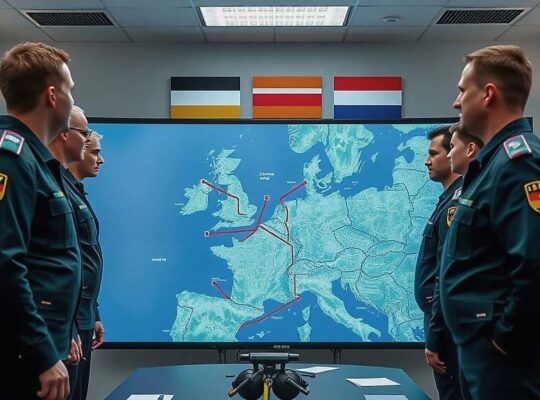
Germany is set to deploy engineering troops to Poland’s eastern border with Belarus and Russia’s Kaliningrad exclave, commencing in April 2026, marking a significant escalation in NATO’s response to perceived Russian aggression and raising questions about the scope and legal justification of the deployment. The operation, dubbed “Eastern Shield” will focus on bolstering Poland’s border defenses through construction of fortifications, including trenches, tank barriers, barbed wire placement and the establishment of defensive positions.
A spokesperson for the German Ministry of Defence confirmed that a “mid-two-digit” contingent of soldiers from the army and support command will be involved, signaling a more substantial commitment than previously indicated. The stated objective is to deter a potential Russian attack against Poland, a key NATO ally. The deployment is currently slated to last until the end of 2027.
The decision to dispatch troops has circumvented the need for parliamentary approval, a move defended by Defence Minister Boris Pistorius (SPD). The justification rests on the argument that the mission doesn’t constitute a deployment of armed forces abroad, nor does it anticipate direct military engagement putting German soldiers at immediate risk. This legal interpretation is already drawing criticism from within the Bundestag.
Opposition parties are questioning whether the distinction between “pioneering activities” and armed conflict is overly semantic, particularly given the escalating geopolitical tensions. Concerns are being raised about setting a precedent that allows for increasingly robust deployments without proper parliamentary oversight. The ambiguity surrounding the exact nature of the activities and the potential for escalation, even if unintended, is fueling debate.
Analysts are observing the development closely, noting that the deployment reflects a tangible shift in Germany’s security posture under the shadow of the war in Ukraine. The decision to sidestep parliamentary scrutiny also highlights the political complexities of balancing security concerns with democratic accountability in an increasingly volatile international environment. The long-term implications for Germany’s foreign policy approach and the future of NATO’s eastern flank remain to be seen.