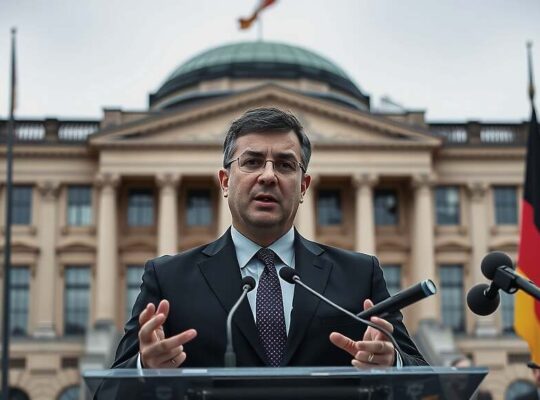
The German Transport Minister, Patrick Schnieder (CDU), is pushing for significantly harsher penalties for attacks against railway employees, signaling a broader shift in strategy to address escalating security concerns within the nation’s rail network. Schnieder, in statements to the Funke-Mediengruppe, condemned incidents of threats and spitting at rail personnel as “deeply reprehensible” and asserted that the state must demonstrate a firm intolerance for such behavior.
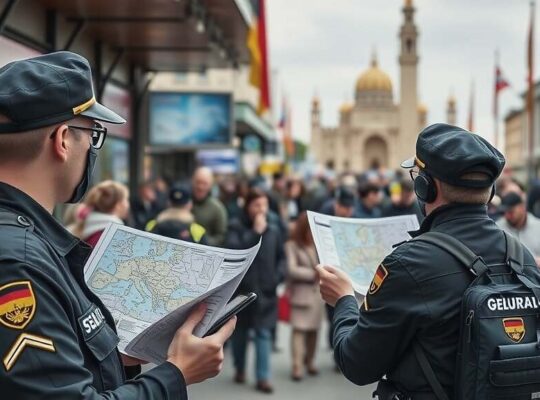
Beyond individual acts of aggression, Schnieder framed attacks on railway workers, emergency services personnel and firefighters as assaults on society itself, necessitating a comprehensive review of legal frameworks, security staffing and the powers afforded to law enforcement officers, particularly the Federal Police stationed at railway hubs.
The announcement comes as part of a forthcoming security strategy slated for release in January, explicitly emphasizing the need to bolster safety and perception of safety within railway stations. This strategy isn’t solely focused on increased personnel and technological upgrades; Schnieder alluded to a redesign of station layouts to minimize areas perceived as unsafe and vulnerable. “Anyone entering a station must feel they’re utilizing a secure and clean mode of transportation within a reasonable environment” he stated.
Acknowledging the broader social complexities intertwined with station safety, Schnieder highlighted the planned refurbishment of 500 stations by 2030 as an opportunity to address homelessness – a challenge he recognizes as a “society-wide responsibility”. While seemingly a gesture of social awareness, the timing introduces a potentially politically sensitive element to the station upgrade project, potentially drawing criticism if resources are perceived as insufficient to tackle the underlying issues contributing to homelessness.
Schnieder also expressed satisfaction with the initial performance of the newly appointed CEO of Deutsche Bahn, Evelyn Palla, praising her commitment to his agenda and decentralizing decision-making, which he believes will expedite processes. The focus, according to the Minister, is now firmly on improving customer experience and fostering a positive perception of rail travel, a critical undertaking given the acknowledged backlog in service delivery.
Despite optimistic aspirations, Schnieder defended the revised punctuality target of 70% for long-distance rail services by 2029, deeming the previous, more ambitious, targets set by the previous DB board – 75-80% by 2027 – “utterly unrealistic”. The current performance hovers around 60%, underscoring the significant challenges ahead and sparking debate about the feasibility of achieving such a substantial improvement.
Finally, Schnieder downplayed the repercussions of his failed attempt to appoint Dirk Rompf as the CEO of DB Infra-GO, attributing Rompf’s withdrawal to excessive criticism from the EVG trade union. He described the criticism as “completely excessive” and defended the professional relationship maintained with the current CEO, Philipp Nagl, emphasizing that the incident has had no negative impact on their collaborative efforts. This episode, however, raises questions regarding the Minister’s judgment and his ability to navigate the complex interplay between political appointments and stakeholder relations within a critical infrastructure sector.