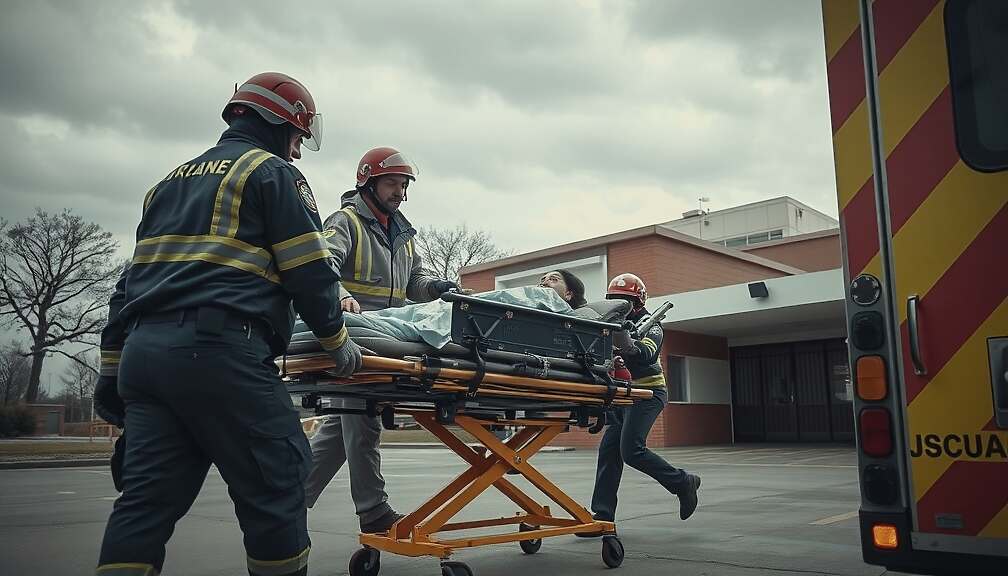
Germany has accepted eleven critically injured patients following the devastating fire in Crans-Montana, Switzerland, marking a significant deployment of the nation’s disaster response infrastructure. The transfers, occurring shortly after the New Year’s Eve tragedy that claimed 40 lives and injured 119 others, highlight both the scale of the disaster and the complexities of cross-border emergency assistance.
The distribution of patients across German states adhered to the “Kleeblattmechanismus” (Cloverleaf Mechanism), a system previously developed during the COVID-19 pandemic to coordinate resource allocation between the federal government and individual states. Four patients were admitted under existing bilateral agreements, with three directed to Baden-Württemberg and one to Rhineland-Palatinate. A further seven were relocated via the EU Civil Protection Mechanism, with hospitals in Bavaria, Rhineland-Palatinate, North Rhine-Westphalia, Lower Saxony, Saxony-Anhalt and Berlin receiving the stricken individuals. The transport operation involved both fixed-wing aircraft and helicopters, emphasizing the urgency of the situation.
The deployment underscores the EU’s commitment to mutual assistance in times of crisis. Overall, 35 patients suffering severe burns have been transported to specialized clinics in Belgium, Germany, France and Italy through the EU Civil Protection Mechanism, with participating countries including France, Italy, Luxembourg, Romania and Switzerland contributing logistical support. Specialized burn treatment teams from France and Italy provided on-site assistance in Switzerland.
The fire, which erupted in a bar in the ski resort of Crans-Montana, has triggered a criminal investigation targeting the bar’s operators. Charges include negligent homicide, negligent injury and negligent arson, raising serious questions about safety protocols and oversight at the establishment. The swift German response, while demonstrating humanitarian capacity, also draws attention to the potential shortcomings that contributed to the catastrophic loss of life and injuries, prompting inevitable scrutiny of preventative measures within Switzerland’s tourism sector and the adequacy of emergency preparedness across the region. Swiss authorities have indicated, at least for the immediate future, that no further transport or treatment capacity is required, although the long-term needs of survivors remain uncertain.