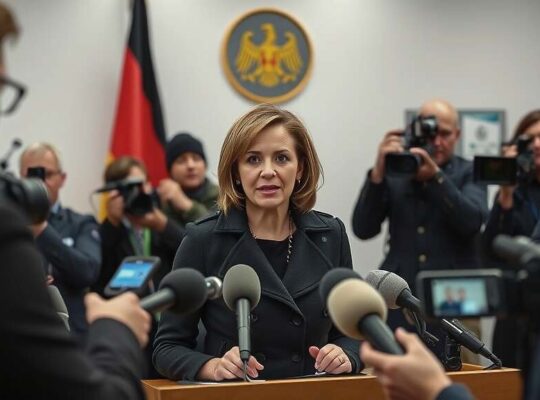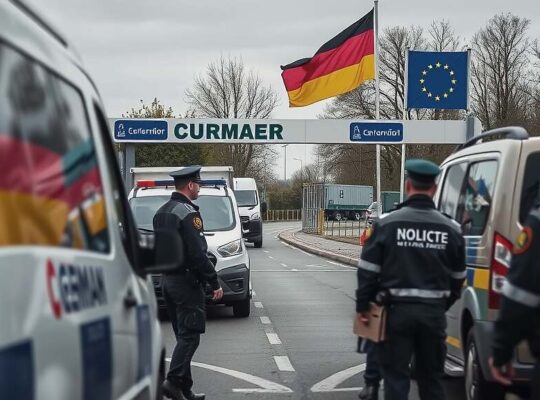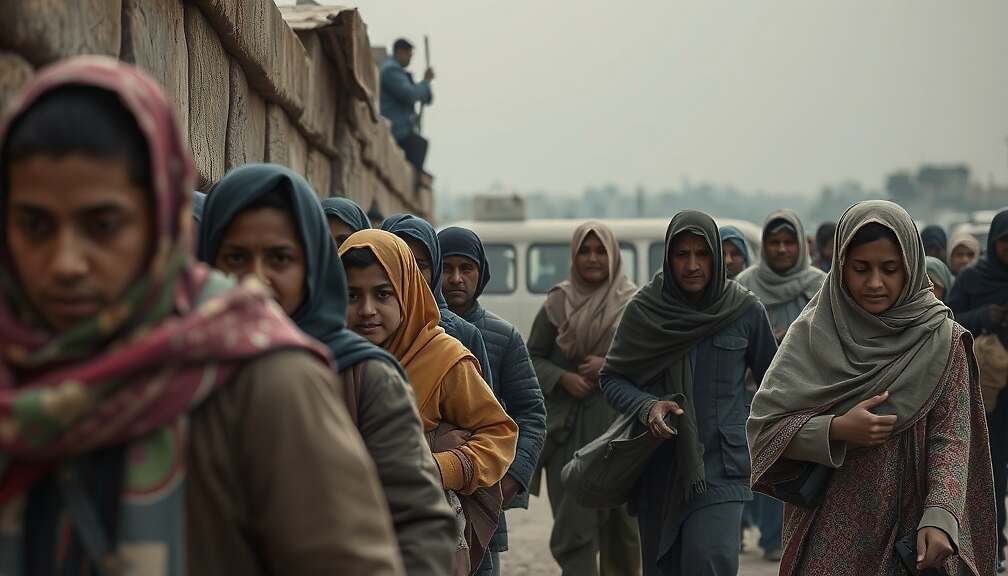
The German state of Baden-Württemberg is increasingly vocal about perceived imbalances in the European response to the influx of Ukrainian refugees, with Justice and Migration Minister Marion Gentges (CDU) criticizing the current distribution model as fundamentally unfair. Speaking to Focus magazine, Gentges expressed concern that the existing “Mass Influx Directive” remains inactive, predicated on the assumption that refugees would organically disperse across the continent – a scenario that has demonstrably not materialized.
Gentges specifically highlighted a potential shift in refugee demographics, anticipating that a growing number of Ukrainian men arriving in Germany to reunite with families will exacerbate the existing strain on resources and heighten the need for a more equitable European-wide solution. Her warning suggests a move away from the self-regulation that has characterized the response thus far and towards a formalized distribution system.
The stark disparities in national efforts are a key driving force behind Gentges’ critique. She singled out France, accusing the nation of contributing disproportionately less to the refugee effort compared to Baden-Württemberg, which has accepted almost double the number of Ukrainian protection seekers. This imbalance, she argues, represents a significant departure from principles of fairness and shared responsibility.
Beyond the immediate logistical concerns, Gentges articulated the expectation that, following a potential cessation of hostilities, the majority of Ukrainian refugees currently residing in Germany will return home. This temporary status, tied to the granting of protection, reinforces the need for a careful and sustainable approach to refugee integration and support.
With approximately 1.25 million Ukrainian refugees currently in Germany and a noticeable increase in young men arriving since the easing of travel restrictions in August, the pressure on German infrastructure and social services is palpable. Gentges’ comments represent a growing political tension within Germany, highlighting the complexities of managing a protracted humanitarian crisis and the increasing calls for a more unified and equitable European strategy. The implicit challenge directed towards France could further politicize the issue and potentially trigger a broader debate within the EU about burden-sharing and the long-term sustainability of the current approach.