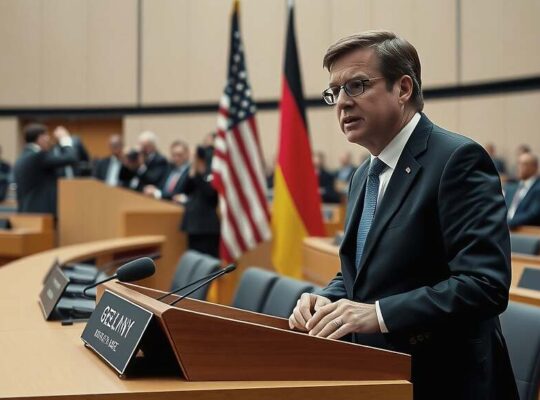
The recent unveiling of the US national security strategy has ignited a tense debate within Germany, sparking warnings of potential damage to crucial intelligence partnerships and raising critical questions about the future of transatlantic cooperation. Marc Henrichmann, chairman of the Bundestag’s Parliamentary Control Committee, issued a stark rebuke, suggesting that the US, particularly under the potential return of Donald Trump, risks dismantling decades of collaborative effort. He argued that Germany’s focus should not be on reviewing its relationship with the United States, but rather on whether Washington truly intends to undermine these established ties.
The core of the concern lies in the US strategy’s overt prioritization of its own interests and its willingness to implement measures to achieve them, even if it strains relations with allies. Former BND President Gerhard Schindler echoed this sentiment, emphasizing that the US is not merely articulating its priorities but actively pursuing them, directly impacting the exchange of intelligence with foreign agencies. Schindler cautioned that while Germany keenly relies on US intelligence capabilities, the reverse is not necessarily true, a reality he described as a “bitter truth.
Beyond the immediate impact on intelligence sharing, the US strategy has drawn criticism for its perceived attempts to manipulate European politics. The document reportedly signals a policy of backing “patriotic forces” within Europe – a thinly veiled reference to right-wing populist movements like the AfD – that challenge the prevailing democratic establishment. This interventionist approach is accompanied by criticisms of alleged democratic deficits and restrictions on freedom of expression within Europe, framing them as justifications for a more assertive US role.
The strategy’s focus extends to European digital regulations aimed at curbing the spread of disinformation and restraining the growing power of tech corporations. The US appears wary of these regulations and their potential to impede American businesses and influence.
Sinan Selen, President of the Federal Office for the Protection of the Constitution, acknowledged the need for continuous reassessment and evolution of alliances, signaling a broader questioning of the existing framework within Germany. The situation presents a complex challenge for Berlin: balancing the necessity of transatlantic partnerships with the imperative of safeguarding national security and developing independent capabilities, potentially operating without full reliance on US support.