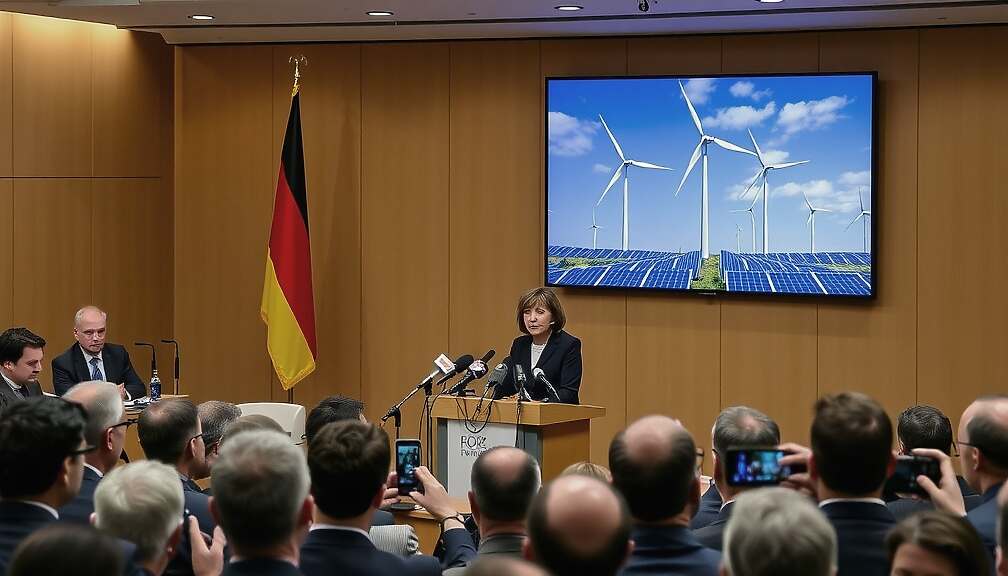
The German Federal Ministry of Economics is drafting regulations that are likely to make it harder to expand renewable energy generation in the country, according to a “network package” proposal reported by “Der Spiegel”. The 36‑page document, dated 30 January, suggests that areas already experiencing grid congestion will become less attractive for new wind and solar plants. In spots where last year more than 3 % of the generated electricity could not be fed into the grid, the text calls the region a “capacity‑limited network zone”.
For developers of new renewable plants in those zones, a fast‑track grid connection would only be granted if the builder accepts forgoing compensation for future curtailments for up to ten years. Grid operators must regularly throttle or even temporarily shut down wind and solar farms when generation exceeds the transmission capacity-an event known as curtailment. Operators receive compensation for the curtailed power, which is factored into their cost estimates for new projects. A loss of that compensation is expected to kill many projects, the industry says, especially since many German areas already see about 3 % of power curtailed.
The ministry’s draft also allows grid operators to charge new renewable developers “construction cost subsidies” requiring them to share in the costs of optimizing, reinforcing and expanding the network. Those additional costs would raise overall investment expenses. The ministry confirmed it is working on measures for better synchronization between renewable expansion and network upgrades and will consult the public in due course. According to the proposal, battery‑storage operators have flooded grid operators with a deluge of connection requests. The ministry said about 400 GW of battery capacity has been applied for, although only a fraction of those projects are expected to be feasible.
Beyond renewable farms and storage, industrial sites, data centres, charging infrastructure, telecommunication networks and other large‑consumption sectors also compete for the same grid connections. The proposal states that operators currently lack the legal flexibility to prioritize requests. The network package aims to improve those conditions.