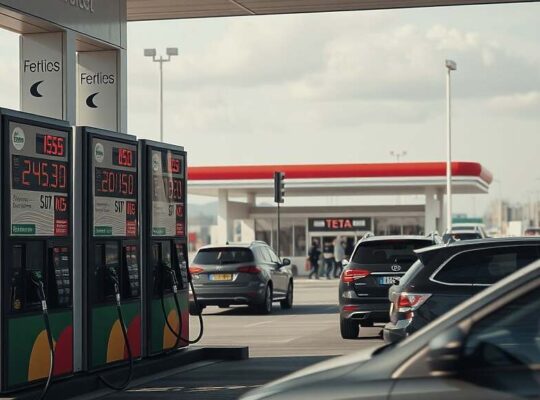
A spokesperson for the Federal Ministry for Economic Affairs stated to the dpa news agency on Wednesday that the ministry could neither comment on potential future measures against persistently high energy prices nor discuss specific actions. However, the spokesperson assured that the Ministry for Economic Affairs is preparing internally for various scenarios and that they will naturally issue analyses concerning different instruments.
The ministry had reportedly modeled several consequences for the Euro area and Germany following the Iran crisis during the Easter period. According to a paper obtained by dpa, titled “Alternative Scenarios of Possible Overall Economic Impacts on the Euro Area and Germany” potential measures were weighed with arguments for and against. Recommendations from the International Energy Agency (IEA) aimed at reducing oil price pressure were received favorably.
The IEA suggested measures such as increased remote working, stricter speed limits on highways, promoting public local transport, and encouraging car-sharing, or even “license plate rotation schemes” restricting private cars to certain days in large cities. Furthermore, the IEA noted that reducing business flights could quickly ease pressure on the jet fuel market.
The possibility of establishing a national gas reserve is also discussed in the paper; however, ministry officials appear to view only drawbacks in such a measure. Minister of Economics Katherina Reiche (CDU) has previously addressed similar considerations. When questioned on Wednesday, the ministry spokesperson merely referred to those past statements, telling the dpa that they must closely examine how to strategically reshape the gas reserve, stating this assessment is separate from the market and that the previous statements remain valid.