Germany’s provisional data, released this week by the Agora Energiewende think tank, indicates a slight reduction in greenhouse gas emissions for 2025, falling by nine million tonnes, a decrease of 1.5% compared to the previous year, bringing the total to 640 million tonnes of CO2 equivalents. While this represents a 49% reduction from the baseline year of 1990 and officially meets Germany’s national emissions target for 2025, the rate of reduction has significantly slowed compared to the previous year.
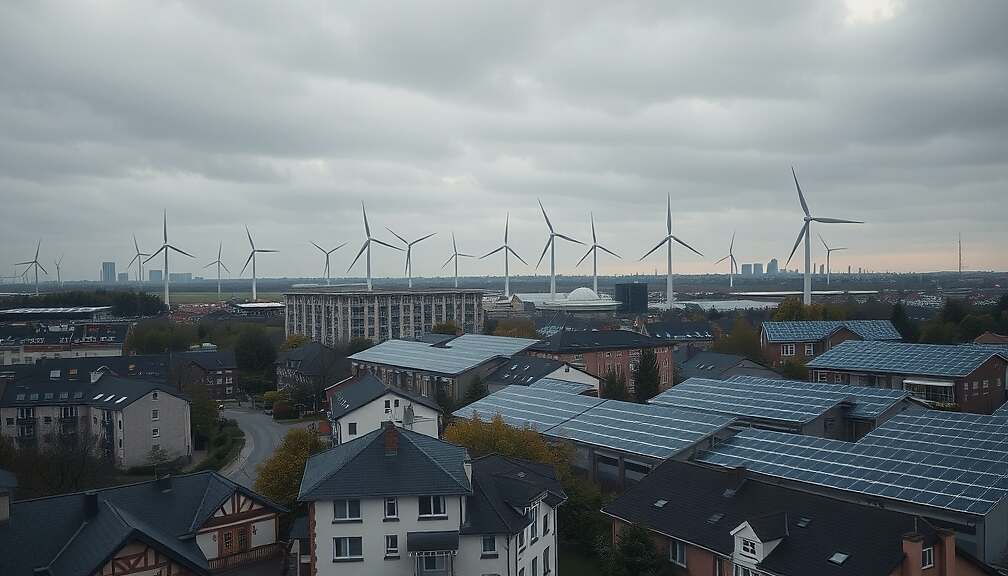
The limited decline is attributed to a complex interplay of economic and environmental factors. Output reductions in energy-intensive industries, influenced by persistent global demand weaknesses and challenging international market conditions, contributed to the emissions decrease. Notably, record solar energy generation also played a role. However, the energy sector itself achieved less substantial reductions than in prior years, largely due to weather-dependent factors.
Critically, the data reveals a concerning trend of rising emissions in vital sectors. Transport and building sectors both experienced increases in 2025. An unusually cold start to the year triggered higher consumption of heating oil and natural gas, pushing building sector emissions up by three million tonnes of CO2, equivalent to a 3.2% rise. Increased fuel consumption, even by a relatively small margin, led to a two million tonne, or 1.4% increase in transport emissions.
These sectoral setbacks mean Germany is, according to current data, failing to meet European climate protection targets by an estimated 30 million tonnes of CO2. This shortfall underscores persistent challenges in decarbonizing key areas of the German economy and raises questions about the effectiveness of current policies in achieving more ambitious climate goals. The divergence from agreed European targets could also exert political pressure on the German government to accelerate its climate action agenda and reassess strategies for difficult-to-decarbonize sectors.