Germany is making headway in its energy transition, according to the latest Energy Transition Monitor released by the German Institute for Economic Research (DIW). The monitor, which details the performance of key technologies in the second half of 2025, has been reported on by the midweek editions of the Funke Media Group newspapers.
Wolf‑Peter Schill, the DIW researcher leading the study on the transformation of the energy sector, urged policymakers to seize the favourable conditions currently in place instead of hindering progress. “Even though electricity demand is rising more slowly than expected, electricity will be scarce later on if renewable capacity is not aggressively expanded” he said.
The monitor highlights a notable increase in large‑scale battery storage. In H2 2025, the storage capacity grew by 0.8 GWh, a rise of more than 25 percent. These batteries capture excess solar and wind generation for periods of low output. DIW believes this uptick in storage has helped reduce the number of hours when wholesale electricity prices fell into negative territory.
In the heating sector, almost half of all new installations in 2025 were electric heat pumps, bringing the total to 2.2 million units. Transport statistics show that 4.5 percent of new vehicle registrations in H2 2025 were electric tractor‑trailers – nearly twice the share seen in the first half of the year. Nevertheless, the overall share of new electric vehicles remains modest: 10.9 percent for trucks and 20.4 percent for passenger cars, though the trend is clearly upward.
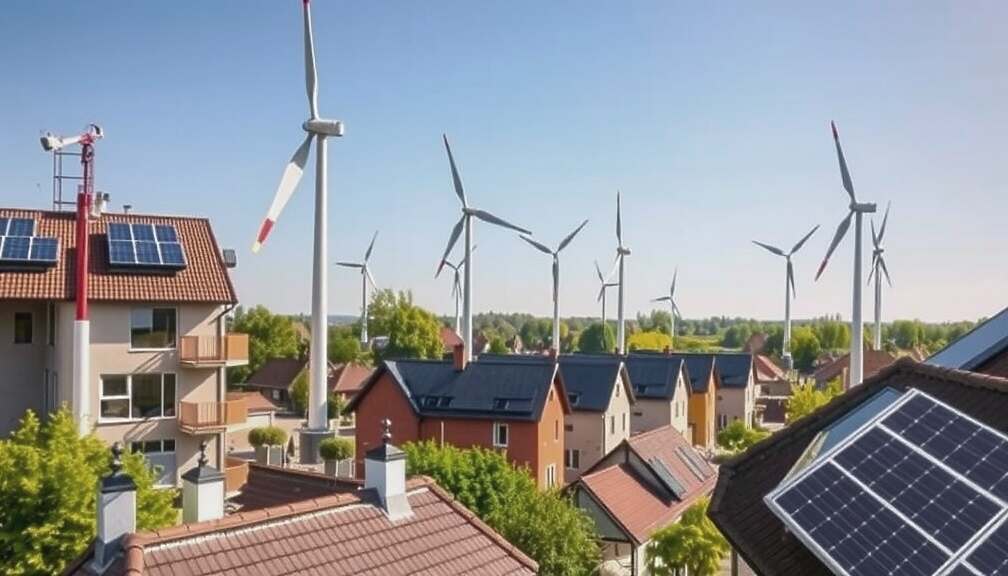
Photovoltaic power also saw a significant relative growth. Installed capacity reached 117 GW, a little over half of the target set for 2030. Onshore wind power expanded in 2025 as well, yet the gap to the goal described in the Renewable Energy Sources Act remains larger. Schill summed up the situation: “We see progress in many areas of the energy transition, but not at the pace that would be desirable for climate protection and energy sovereignty”.