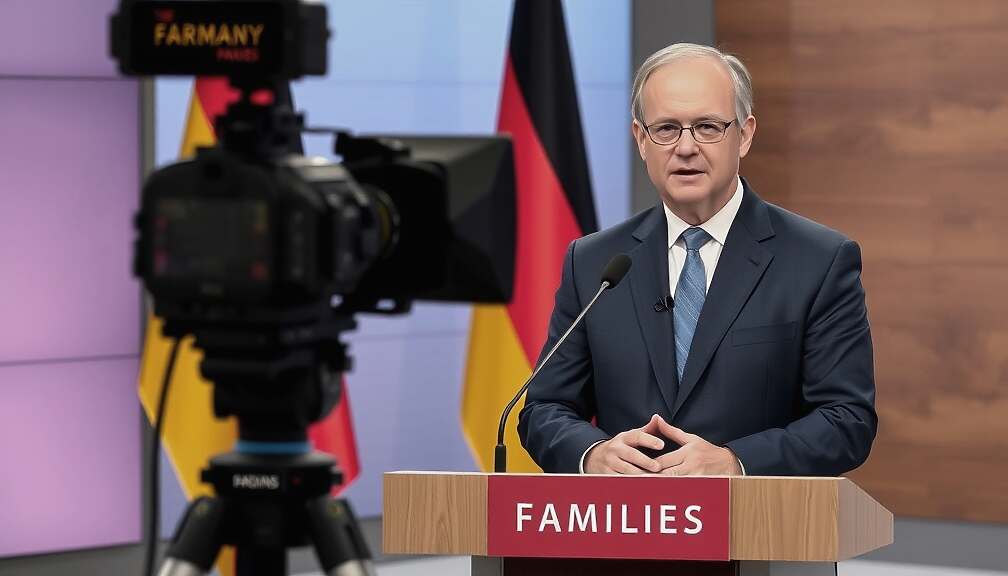
Karin Prien, Germany’s federal minister for families and sister‑in‑law of the late Christian Democratic leader Rita Süssmuth, is pressing for a swift overhaul of the country’s electoral law. In an interview with the Berliner “Stern” she said such a reform is “central for the coalition”.
Prien warned that the current trend-whereby many electoral districts are not represented by a member in the Bundestag-must be reversed. “It is a question of the credibility and interpretability of elections” she added, stressing that an urgent correction is needed regardless of whether a constitutionally‑compliant parity proposal is reached.
Previously the Social Democratic Party had linked the adoption of parity rules for parliamentary representation to the electoral‑law reform. Prien rejected that connection. “The work of the electoral‑reform commission should not be tied to a quick fix for parity” she said. She argued that the commission should also tackle the problem of direct‑constituency representation while still debating parity issues.
Nonetheless, Prien reaffirmed her aim of establishing constitutionally‑sound parity regulations. She warned that the existing rules hardly improve representation for women. “The challenge is to find how to constitutionally enhance female representation” she noted, citing jurisprudence that makes progress difficult.
Facing criticism-some from within her own party-for pushing this issue, Prien defended her long‑standing commitment: “I have been advocating for this goal for years, and as a women’s minister I won’t stop”. She contrasted Germany’s heated parity debates with those in other European countries, where the discourse is “much calmer”. “It seems that the hard stance is part of a social development in which gender‑equal questions appear to have lost relevance” she said, and she was quick to reject that view.
Prien also addressed the CDU directly, asserting that the party itself must move forward on parity. “Many state associations are already making progress and devising solutions” she said, positioning herself within the Christian‑Democratic tradition-as a successor to the legacy of Rita Süssmuth-which she sees as a vital part of her role as federal minister.