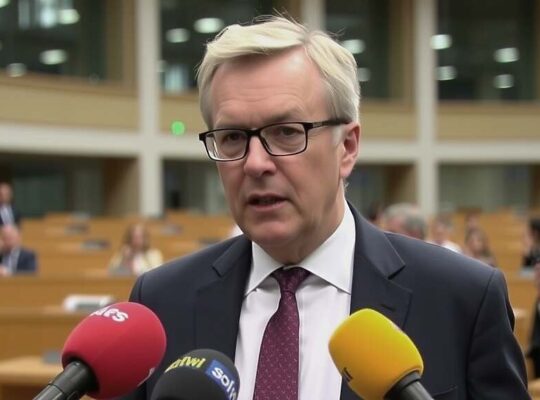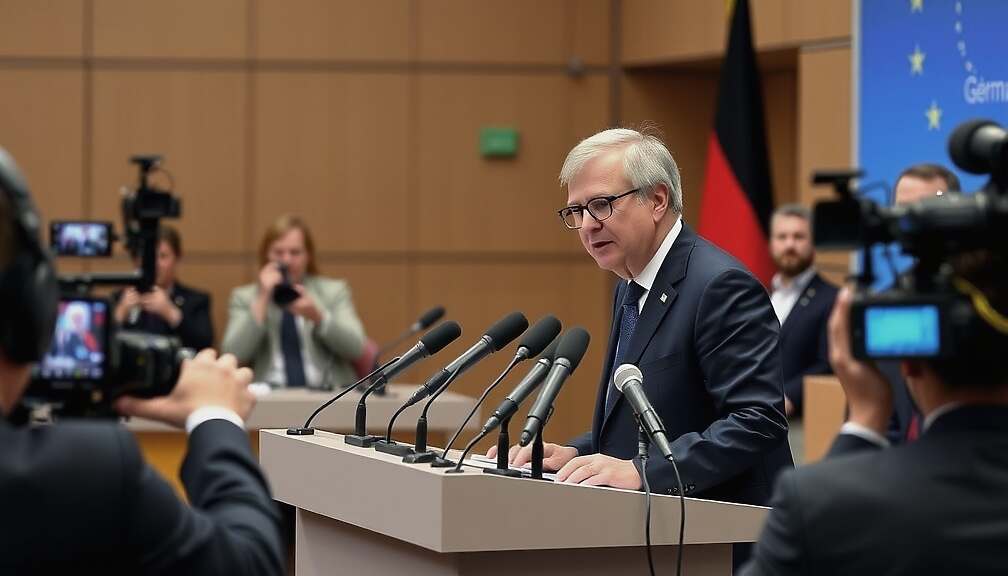
German Foreign Minister Johann Wadephul (CDU) welcomed European Union officials’ decision to officially designate the Islamic Revolutionary Guard Corps (IRGC) as a terrorist organization. “The EU finally classifies the IRGC as they truly are: a terrorist body” he said on Thursday. “This current decision sends a strong, overdue political signal”.
Wadephul framed the move as a clear message of European solidarity with the Iranian people. “By doing this we show that the EU sees what is happening inside Iran” he said. “We stand for humanity and against oppression. The next step is to implement the listing promptly”.
He described the IRGC and its auxiliary forces as “sinner” elements of the Iranian regime, responsible for “inexorable brutality against their own population”. According to Wadephul, the guard has executed ordinary citizens who dared to voice dissent on the streets, destabilized the region, and behind attacks in Germany and across Europe. “They have blood on their hands” he insisted. The minister called for accountability for those responsible for the brutal suppression of protests. “We have already imposed targeted sanctions on individuals who wield the justice system for continual repression; their crimes must not go unanswered”.
Jürgen Hardt, the foreign‑policy spokesperson for the Union faction in the Bundestag, echoed this view, referring to the IRGC as the “core of the criminal Mullah regime”. He noted that the connection between the guard and the Iranian state had kept the EU from sanctioning for too long. “With the listing we clearly identify what Iran is under the Mullah regime: a terrorist state”.
Hardt also stressed the importance of continuing to support the protest movement within Iran. “The Iranian people must pave the way toward democracy themselves, but they deserve all the support they can get” he said. “This decision marks a milestone and a significant success for Chancellor Merz and Foreign Minister Wadephul”.
Agnieszka Brugger, deputy chair of the Green faction, described the EU’s action as “long overdue”. She highlighted how both Wadephul and his predecessor, Annalena Baerbock, had worked in Brussels to convince hesitant partners and established the legal groundwork during the prior legislative session. Brugger called for further concrete measures to aid courageous Iranians: extending the UN Human Rights Council’s fact‑finding mission in Geneva, allowing humanitarian entry, and raising protection for people in Germany who face pressure or threats from the regime.
She added that those challenging the Iranian terror regime should not retreat on domestic political grounds when confronting the women‑hatred of the Afghan Taliban. “The fight for human rights, especially against systematic oppression of women, must remain non‑selective” she said.
The IRGC is part of Iran’s armed forces and is widely regarded as the most powerful institution in the country. Its central role in quashing protests has been documented by various sources. The human‑rights network HRANA reported over 6,000 deaths, with more than 17,000 additional suspected deaths under investigation. A Time Magazine report estimates that the regime killed 30,000 people during the rallies on January 8 and 9 alone.